Written by Dr. Guneet Bedi, MD Dermatology | House of Aetheria, Gurugram
In collaboration with Sunil Katal, Co-Founder & Wellness Researcher, House of Aetheria
You followed the routine. Vitamin C serum in the morning, retinol at night, a peel every few weeks. Maybe you even tried a laser session at a popular clinic in Gurugram. And yet that patch on your cheekbone is darker than it was three months ago. You're not doing something wrong. The protocol was wrong. It was built for a skin type that is fundamentally different from yours. Indian skin produces melanin differently, reacts to inflammation differently, and needs a completely different treatment approach. Not a gentler version of the same plan. A different plan altogether.
The Melanin Equation: Why Indian Skin Plays by Different Rules
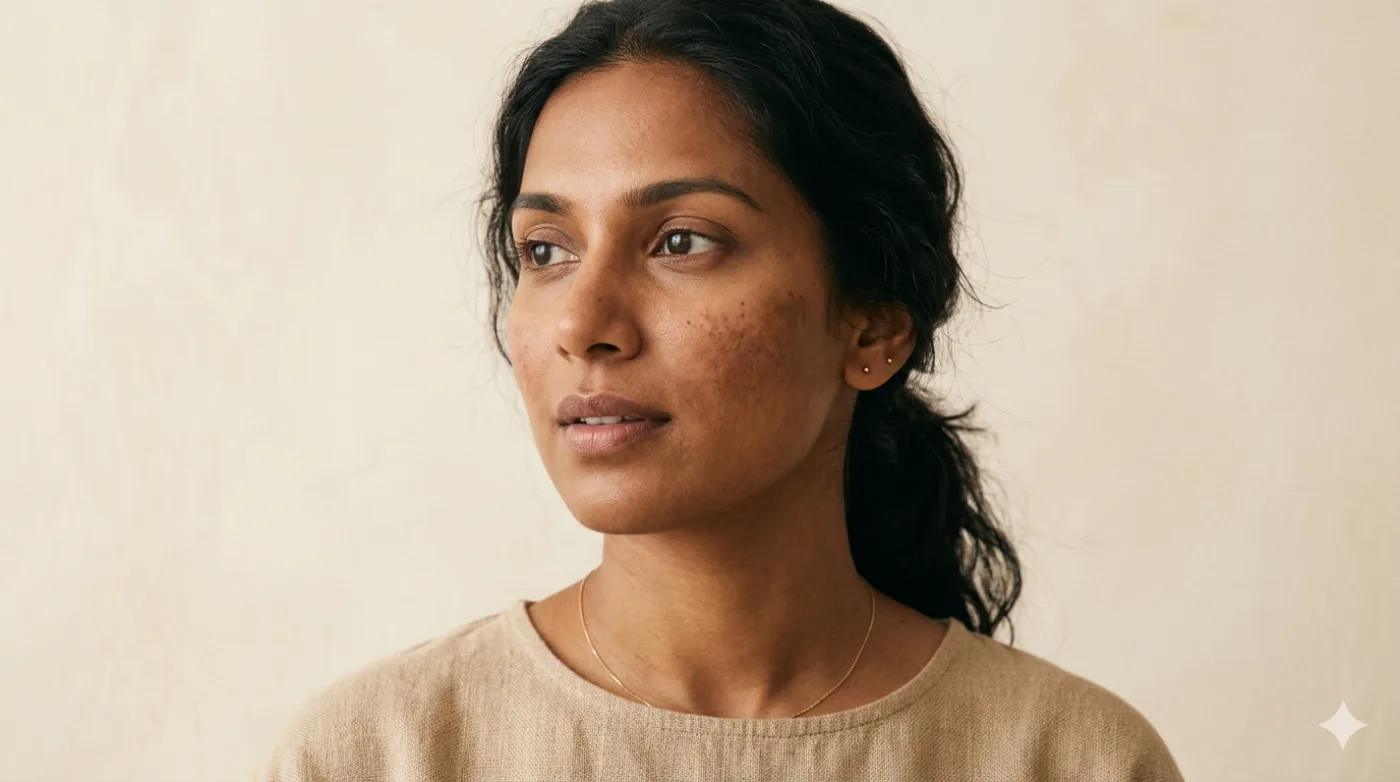
Dermatologists classify skin into six types based on how it responds to sun exposure. Indian skin typically falls into types IV, V, and VI on this scale. A common misconception is that darker skin has more melanin-producing cells than lighter skin. It doesn't. The actual count is similar. The difference is in how those cells behave. In Indian skin, the packets that carry melanin are larger, more plentiful, and break down more slowly. This makes the skin significantly more sensitive to anything that causes inflammation — a laser pulse, a chemical peel, even a stubborn pimple. Any of these can trigger a surge of melanin production that lasts long after the original cause has cleared.
The enzyme that controls melanin production — tyrosinase — is roughly 2 to 3 times more active in Indian skin compared to fairer skin types. Any treatment that causes even mild inflammation can push it into overdrive. That is why so many patients end up darker after an aggressive peel, not lighter.
This is the core reason why standard Western pigmentation protocols, developed and tested predominantly on Fitzpatrick I-III skin, often cause rebound hyperpigmentation on Indian patients. The treatment itself becomes the trigger.
Why Standard Pigmentation Treatments Fail on Indian Skin
The Aggressive Peel Problem
Chemical peels are among the most commonly offered pigmentation treatments across Delhi-NCR. The issue is not peels themselves. Superficial peels (glycolic 20-35%, mandelic, lactic) can be excellent for Indian skin when used correctly. The problem is depth and frequency. A 70% glycolic peel or a medium-depth TCA peel that works beautifully on a type II patient can cause extensive post-inflammatory hyperpigmentation (PIH) on type IV-V skin, leaving the patient with marks worse than their original complaint.
We've had patients come to us with PIH from aggressive chemical peels done in non-medical settings. Salons, medispas, even some clinics use identical concentrations across all skin types. Treating Indian skin is not harder. It just requires a different protocol.
The Laser Misfire
Laser treatment for melasma on skin of color is not inherently dangerous. But the wrong laser, wrong settings, or wrong candidate selection can produce devastating results. High-fluence Q-switched lasers that effectively shatter pigment in lighter skin can cause thermal injury to surrounding melanocytes in darker skin, triggering the exact rebound hyperpigmentation patients came in to treat.
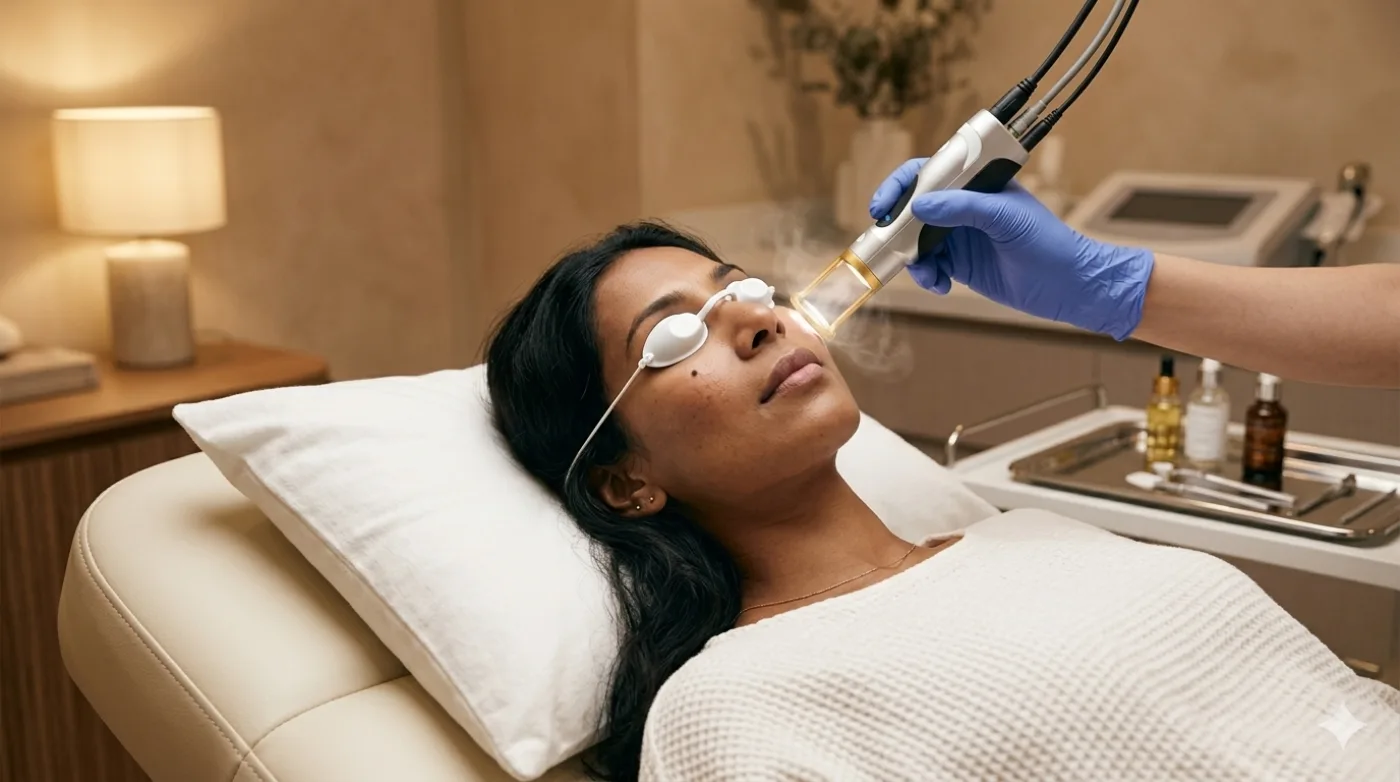
The safer approach for Indian skin involves low-fluence, large-spot-size Nd:YAG lasers (1064nm) at sub-thermolytic settings. This means delivering energy below the threshold that causes inflammation. Sessions are spaced 2-4 weeks apart, and the results are gradual. Patients expecting a single-session transformation are the ones most likely to be overtreated.
The Overtreatment Cycle
Here's a pattern we see repeatedly at our clinic. A patient starts with mild melasma. Gets a moderately aggressive treatment. Develops PIH from the treatment. Returns for another round to "fix" the new marks. Gets treated again. The cycle continues. Each round of inflammation deposits more dermal melanin, pushing what started as a superficial problem deeper into the skin where it becomes exponentially harder to treat. By the time many patients reach a dermatologist who understands melanin reactivity, the condition has progressed from epidermal to mixed or dermal melasma.
Epidermal vs. Dermal Melasma: Why the Distinction Changes Everything
Not all pigmentation is the same depth, and depth determines treatment. This is perhaps the single most overlooked factor in pigmentation treatment for Indian skin across Delhi-NCR clinics.
- Epidermal melasma sits in the upper layers. It appears brown, has well-defined borders, and responds relatively well to topicals and superficial treatments. A Wood's lamp examination shows enhanced contrast. Typical response time: 8-12 weeks with correct protocol.
- Dermal melasma involves melanin deposits deep in the dermis, often carried there by melanophages (immune cells). It appears grey-blue, has indistinct borders, and shows minimal enhancement under Wood's lamp. This is resistant to most standard topicals and many laser protocols. Response time: 6-12 months or longer.
- Mixed melasma involves both layers and is the most common presentation in Indian patients. It requires a layered treatment strategy addressing both depths simultaneously.
In our practice, about 7 in 10 melasma patients we see have pigment that sits in the deeper layers of the skin, or in both layers. Most have already undergone treatment assuming it was all superficial. That mismatch is usually why nothing worked.
Acquired dermal macular hyperpigmentation (ADMH) is another condition frequently confused with melasma in Indian patients. The grey-brown patches on the forehead or temples look similar but respond to entirely different protocols. A correct diagnosis at the outset saves months of ineffective treatment.
What Actually Works: A Protocol Framework for Indian Skin Pigmentation
Effective pigmentation treatment for Indian skin follows one core principle: go slow. Lower intensity. Longer timelines. More patience. That is how you get results that last.
Step one is always a proper assessment. Before any treatment, a dermatologist needs to determine where your pigmentation actually sits. This is done using a Wood's lamp and dermoscopy. Skipping this step and jumping straight to a laser or peel is one of the most common reasons treatments fail.
Step two is a preparation phase of 4-6 weeks at home. Certain topicals quiet down melanin overactivity before any procedure begins. Ingredients like tranexamic acid, arbutin, and azelaic acid work well for Indian skin. A low-dose retinoid is usually added. This phase makes in-clinic procedures significantly safer and more effective.
Step three is choosing the right procedure based on depth. Superficial peels work for pigmentation in the upper layers. Low-fluence laser toning with an Nd:YAG 1064nm laser is used for deeper pigment. Many patients need a combination. Sessions are spaced 3-4 weeks apart, not weekly.
Step four is the one most people underestimate: sunscreen, every single day. About 80% of long-term results depend on consistent sun protection. Without it, every procedure is temporary. In Gurugram's UV and pollution environment, this means broad-spectrum SPF 50, reapplied during the day, throughout the year.
The Gurugram Factor: Why Location Matters for Pigmentation Treatment
Living in Delhi-NCR adds specific challenges to managing hyperpigmentation. Gurugram's summer temperatures exceed 45°C, and UV index regularly reaches 10-11 between April and September. But UV is only part of the story. The city's AQI frequently crosses 300 during October through February, and particulate matter (PM2.5) has been shown to upregulate melanogenesis through the aryl hydrocarbon receptor pathway. This means pigmentation in NCR residents is driven by both solar and pollution-related mechanisms.
SPF compliance in this environment needs to be aggressive: broad-spectrum SPF 50, reapplied every 3 hours during outdoor exposure, with a formulation that also offers some particulate matter protection (iron oxide-containing sunscreens block visible light, which also triggers melanogenesis in darker skin types). We also recommend timing intensive treatments between October and February, after monsoon humidity drops but before peak winter pollution. Patients preparing for wedding season or festive events should ideally begin their pigmentation protocol 4-6 months in advance, not 4-6 weeks.
Why Indians Develop Melasma More Than Other Populations
The prevalence of melasma in Indian women is estimated at 20-30%, compared to roughly 1-5% in lighter-skinned populations. Multiple factors converge. Higher baseline tyrosinase activity. Hormonal triggers (PCOS prevalence in Indian women is among the highest globally at 20-25%). Oral contraceptive use. Tropical to subtropical climate with year-round UV exposure. And a cultural factor that deserves honest discussion: the widespread use of unregulated depigmenting creams, some containing high-concentration steroids or mercury, which thin the skin barrier and ultimately worsen melanin dysregulation.
Hormonal melasma, especially pregnancy-related or PCOS-driven, requires concurrent hormonal assessment. In our practice, we routinely coordinate with functional medicine evaluation when melasma is resistant to topical and procedural treatment. Sometimes the skin isn't the primary problem. The skin is reflecting a systemic imbalance.
The Realistic Path Forward
If you've tried multiple pigmentation treatments and your skin looks the same or worse, the problem almost certainly isn't your skin. It's that the protocol didn't account for how your skin actually processes melanin. That patch on your cheekbone isn't being stubborn. It's responding predictably to the wrong approach. Pigmentation treatment for Indian skin requires depth assessment, gentle escalation, rigorous sun and pollution protection, and a timeline measured in months rather than sessions. If you're in Gurugram or Delhi-NCR and want a dermatologist-led evaluation that starts with understanding your specific pigmentation type before recommending any treatment, Dr. Guneet Bedi and the dermatology team at House of Aetheria are available for consultation. For an overview of specific treatments, see our guide to pigmentation treatments in Gurugram. You can reach us through houseofaetheria.com or visit us in Sector 65, Gurugram.
Frequently Asked Questions
Is laser treatment safe for dark Indian skin with pigmentation?
Yes, when the correct laser is selected at appropriate settings. Low-fluence Nd:YAG 1064nm laser toning is considered safe for Fitzpatrick IV-VI skin. The key is avoiding high-energy, short-pulse lasers that cause thermal injury to melanocytes. Safety depends entirely on device selection, fluence settings, and the treating dermatologist's experience with skin of color.
How long does hyperpigmentation realistically take to fade on Indian skin?
Epidermal pigmentation (brown, well-defined) can show visible improvement in 8-12 weeks with the right protocol. Dermal or mixed melasma typically requires 6-12 months of consistent treatment and maintenance. Post-inflammatory hyperpigmentation from acne marks usually takes 3-6 months to fade significantly. Patience and SPF compliance are the two most underrated factors in timeline outcomes.
Can aggressive chemical peels cause more pigmentation on Indian skin?
Absolutely. Medium to deep chemical peels (high-concentration TCA, deep glycolic) on Fitzpatrick IV-VI skin carry a significant risk of post-inflammatory hyperpigmentation. The inflammation from the peel itself triggers melanin overproduction. Superficial, well-timed peels with proper pre-treatment preparation are safe. The problem is almost always inappropriate depth or concentration for the skin type.
What is the difference between epidermal and dermal melasma, and why does it matter for treatment?
Epidermal melasma involves pigment in the upper skin layers and responds well to topicals and superficial procedures. Dermal melasma involves pigment trapped deep in the dermis, appears grey-blue, and is resistant to most standard treatments. The depth determines which treatments will work and which will waste time or cause harm. Accurate assessment before starting any protocol is non-negotiable.
How is pigmentation treatment at House of Aetheria different from what I have already tried?
The most common reason patients come to us after failed treatments elsewhere is that no one assessed their pigmentation depth before starting. We begin every consultation with dermoscopy and a Wood's lamp examination to identify whether your pigmentation is epidermal, dermal, or mixed. The treatment plan is then built around that finding, not around a standard package. We also coordinate with our functional medicine team when melasma appears to have a hormonal component, which is very common in Indian women. Our approach is slower and more deliberate than most, but the outcomes are more durable.