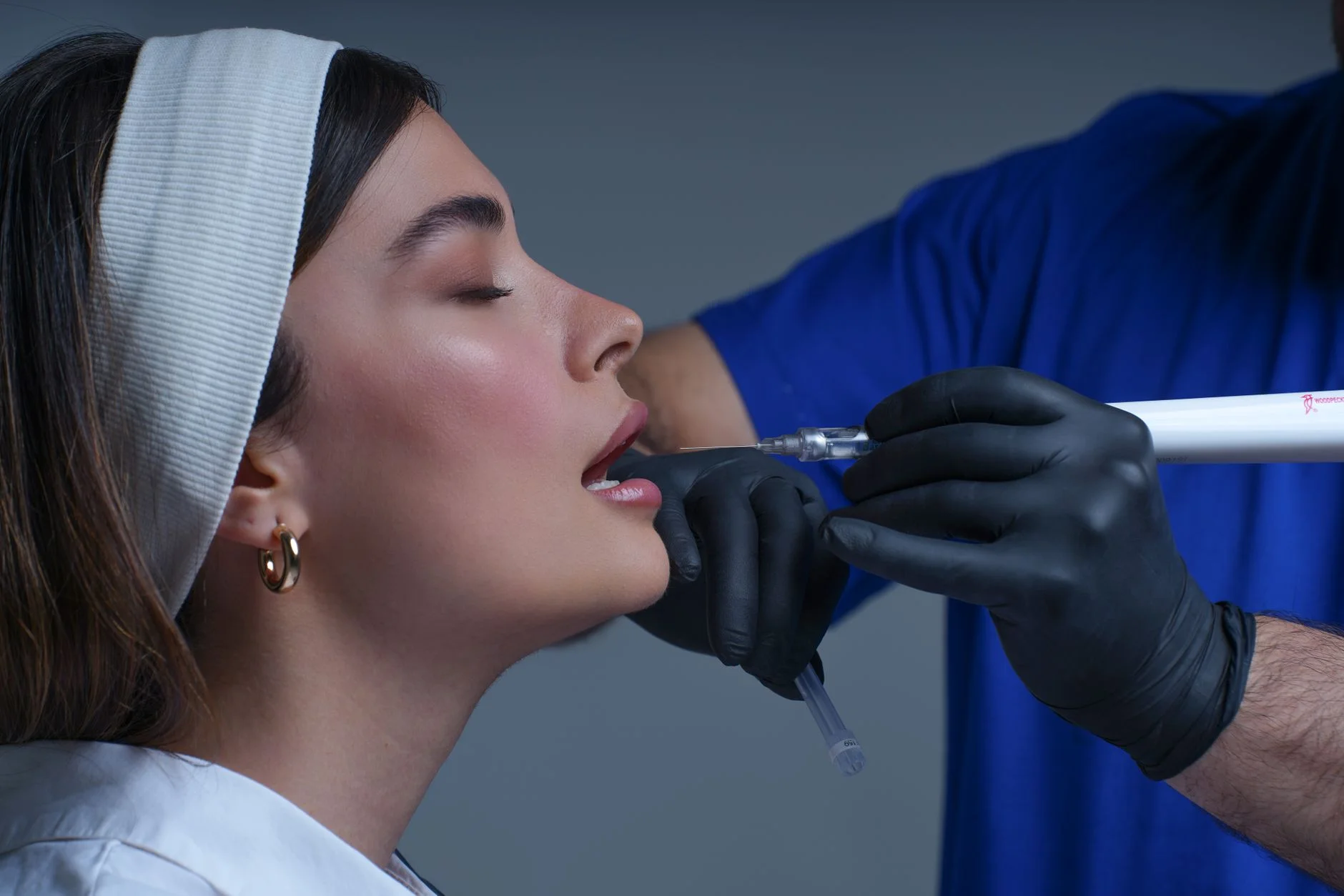
You are not imagining it. The submental area — the zone under the jaw and above the neck — is genuinely one of the most diet-resistant fat pockets on the human body. It is also one of the most visible in photographs, video calls, and reflections that catch you at the wrong angle.
The frustrating part is that this has almost nothing to do with how fit or healthy you are overall. For many people, submental fat is genetic. The fat cells are simply there, inherited from a parent who had the same chin, and no amount of cardio changes that.
This is where fat-dissolving injections enter the picture.
How Lipolytic Injections Work
The active compound in medical-grade fat-dissolving injections is deoxycholic acid — a molecule that occurs naturally in the body and is involved in breaking down dietary fat. When injected directly into a submental fat deposit, it disrupts the membrane of fat cells, causing them to break down. The body then processes and eliminates the released fat naturally over several weeks.
The critical distinction from weight-loss treatments: this is not about reducing overall body fat. It is targeted. The injections go precisely into a defined area, and the destroyed fat cells do not regenerate. Results are permanent as long as significant weight fluctuations are avoided.
What the Treatment Involves
A session typically takes 20–30 minutes. A grid is mapped on the chin and neck area, and a series of micro-injections are administered in a precise pattern. Most patients describe a mild burning sensation that fades within minutes.
What to expect in the days following:
- Swelling (common and expected — it confirms the treatment is working)
- Bruising in some patients
- A feeling of firmness or tightness under the jaw
- Full resolution of swelling: typically 1–3 weeks
Most patients need 2–4 sessions spaced 4–6 weeks apart to achieve their desired result. The exact number depends on the volume of fat in the submental compartment.
Doctor's Perspective
Dr. Debjani Chakraborty, aesthetic injector at House of Aetheria, explains: "The biggest misconception is that lipolytic injections are a weight-loss treatment. They are not. The ideal patient is someone who is close to their healthy weight but has a localized pocket of fat that is simply not responding to lifestyle measures. When the anatomy is right, the results can be genuinely transformative — because even a modest reduction in submental volume changes the entire jaw-neck relationship."
Is It Right for You? A Quick Candidacy Guide
| Suitable Candidate | Less Suitable Candidate |
|---|---|
| Localized submental fat with good skin elasticity | Significant skin laxity requiring surgical intervention |
| Near-healthy BMI with diet-resistant chin fat | Actively trying to lose substantial overall weight |
| Patient with realistic timeline expectations (8–12 weeks) | Pregnancy or breastfeeding |
| No previous adverse reactions to similar injectables | Active infection or inflammation in treatment area |
Fat-Dissolving vs Other Chin Reduction Options
If you have been researching, you will have encountered several options. Here is how they compare honestly:
| Treatment | Invasiveness | Permanence | Downtime | Best For |
|---|---|---|---|---|
| Lipolytic Injections | Minimal | Yes (fat cells don't return) | 1–3 weeks swelling | Mild–moderate submental fat |
| Liposuction | Surgical | Yes | 1–2 weeks | Larger fat deposits |
| Thread Lift | Minimal | No (12–18 months) | 2–5 days | Skin lifting, not fat reduction |
| HIFU | Non-invasive | Partial (tightening only) | None | Skin tightening, not fat reduction |
The most common combination we see at House of Aetheria is lipolytic injections to reduce the fat volume, followed by a thread lift to address any resulting skin laxity — giving both a slimmer and more defined jawline.
What Results Look Like
Results begin to show at 4–6 weeks and continue improving for up to 3 months after each session. Most patients do not look "done" — they simply look like a version of themselves with a more defined jaw-neck angle.
A double chin is not a character flaw or a fitness failure. It is anatomy. And in many cases, it is anatomy that can be addressed precisely and permanently without surgery. The starting point is always an honest conversation about whether the treatment is a genuine match for your specific anatomy.