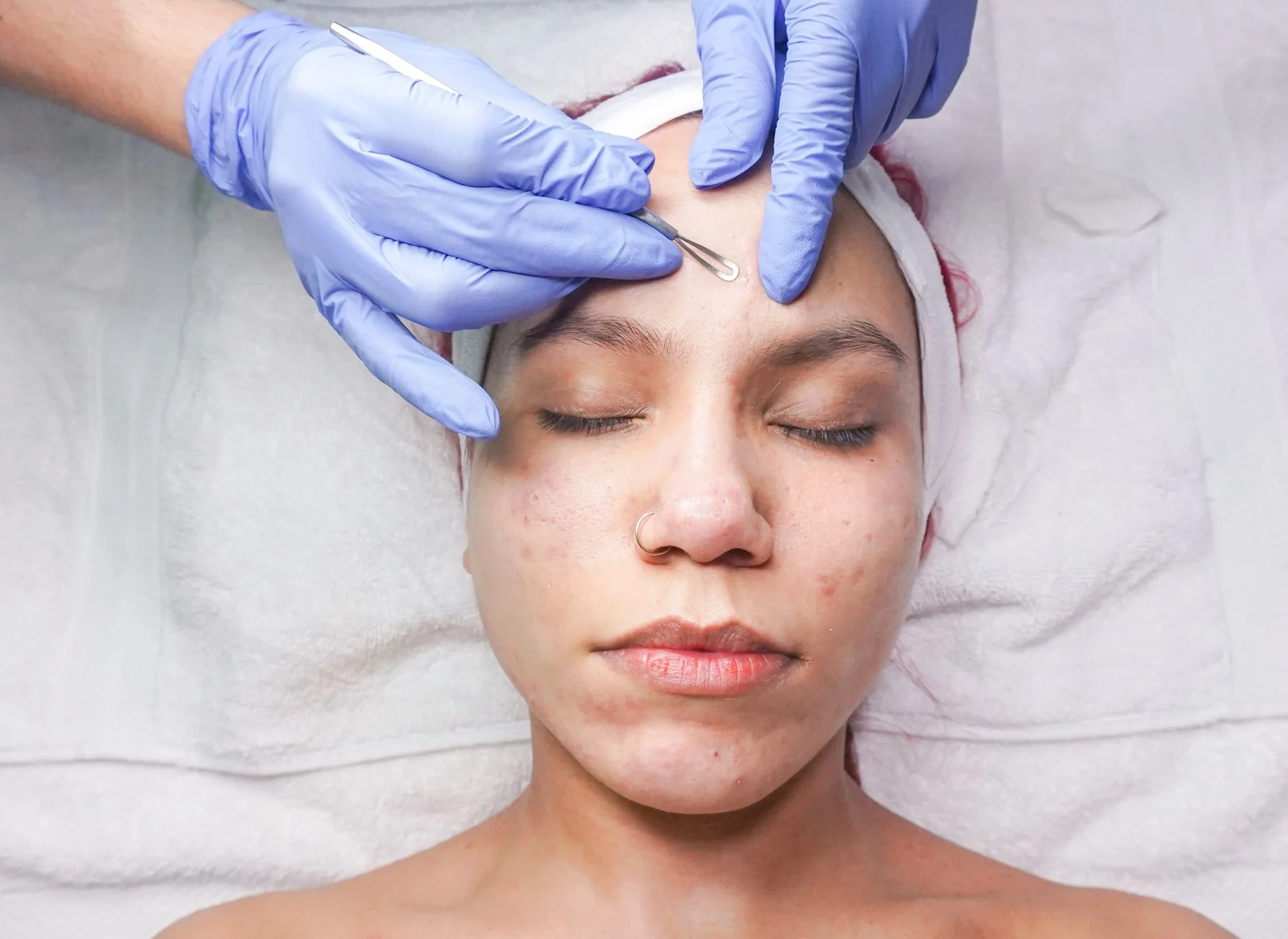
You washed your face twice a day as a teenager without ever getting a spot. Now, at 33, you are breaking out along your jaw every month on a predictable cycle. The cleanser was changed. The pillowcase gets washed weekly. A prescription retinol cream was tried and abandoned after it made things worse. The skin is clean. This is not a hygiene problem. It is a hormonal one. And it requires a completely different treatment approach from the benzoyl peroxide logic that teenage acne responds to.
Why adult hormonal acne is physiologically different from teenage acne
Teenage acne is driven primarily by the surge of androgens at puberty causing generalised sebum overproduction across the T-zone. Adult hormonal acne — particularly in women in their late twenties to early forties — is driven by fluctuations in oestrogen and progesterone relative to androgens across the menstrual cycle. These fluctuations stimulate sebaceous glands in androgen-sensitive zones, specifically the lower face: jaw, chin, and sometimes upper neck. The pattern is cyclical. Breakouts appear 7–10 days before a period, coinciding with the pre-menstrual progesterone peak, and tend to resolve within a week of menstruation beginning.
The diagnostic pattern to recognise in your own breakouts
| Pattern | Likely Driver | What It Tells the Dermatologist |
|---|---|---|
| Breakouts on jaw and chin, cyclical | Hormonal fluctuation (oestrogen/progesterone) | This pattern is a strong indicator of hormonal acne, not cleansing-related breakdown. |
| Breakouts worse under stress | Cortisol spikes increasing androgen sensitivity | Stress-pattern hormonal acne requires management that includes cortisol support. |
| Adult acne onset in 30s, never as teenager | Late-onset hormonal sensitivity or PCOS-related | This warrants investigation for underlying hormonal condition. |
| Breakouts coincide with dietary changes | Dairy/high-GI diet impact on IGF-1 and sebum | Diet has a modifiable component, though it is not the sole driver in most cases. |
| Skin is dry but still acne-prone | Barrier dysfunction alongside hormonal sebum fluctuation | Treatment requires both barrier repair and hormonal management. |
Why the standard over-the-counter acne advice makes adult hormonal acne worse
Products designed for teenage acne — benzoyl peroxide washes, salicylic acid toners, harsh exfoliants — work by drying and clearing excess surface sebum. Adult hormonal acne in the 30s is often occurring on skin with already-compromised barrier function: dehydrated, sensitive to environmental stress, producing cyclical sebum rather than the constant overproduction of adolescent skin. Stripping and drying this skin with teenage-acne products removes the barrier's protective layer, increases transepidermal water loss, and creates a reactive cycle where the skin produces more sebum to compensate. The patient feels like their skin is 'oily and dry at the same time' — because it is.
"Adult hormonal acne is one of the most mismanaged skin conditions I see, primarily because patients have tried to self-treat it with products that are entirely wrong for the underlying mechanism. The first thing I do in an assessment is establish the pattern: where on the face, at what point in the cycle, and what the skin barrier looks like between breakouts. That triage tells us whether we are managing hormonal fluctuation, barrier repair, inflammation, or all three simultaneously. In most cases, all three. And none of those are solved by a benzoyl peroxide wash." — Dr. Akshay Jain, Dermatologist, House of Aetheria
What clinical treatment of hormonal acne actually involves
A dermatologist-led treatment plan for adult hormonal acne combines multiple approaches simultaneously, matched to the severity and pattern:
- Prescription topicals: low-dose retinoids to normalise cell turnover; azelaic acid for anti-inflammatory and mild hormonal modulation; niacinamide-based barrier repair
- Oral options where indicated: low-dose spironolactone (an androgen blocker) is the most effective hormonal intervention for female patients with clear cyclical acne; oral contraceptives with appropriate progesterone profile can also stabilise the cycle-driven component
- In-clinic treatments: chemical peels at House of Aetheria targeting comedonal congestion between flares; LED therapy for anti-inflammatory support; extraction and intralesional corticosteroids for acute deep cystic lesions
- Dietary review: not a standalone treatment, but dairy reduction and glycaemic load management reduce the IGF-1 signalling that amplifies sebum production in androgen-sensitive skin
For patients with residual scarring from past breakouts, microneedling for acne scarring can be integrated into the broader treatment plan once active inflammation is under control.
Seasonal shifts can also introduce a distinct breakout pattern on top of hormonal acne — Gurgaon's monsoon humidity creates conditions for fungal acne and monsoon-specific skin challenges that require a separate protocol from hormonal management. If your acne is cyclical, concentrated on your lower face, and has been unresponsive to products you have tried for more than three months, this is a dermatologist problem, not a product problem. Book a hormonal acne consultation at House of Aetheria, Sector 65. The assessment distinguishes between the hormonal, inflammatory, and barrier components of your specific breakout pattern, and the plan addresses all three.