The name is the problem. 'Vampire facial' arrived as a descriptor because Kim Kardashian posted a photograph of herself mid-treatment in 2013 — face visibly red, blood-derived material applied across the skin — and the image went viral for aesthetic impact rather than clinical explanation. Since then, the name has stuck while the mechanism has remained poorly understood by most people who have heard of it. What is actually being done during a PRP facial is substantially more clinically grounded than the branding suggests. And for the right concern, it is one of the more elegant skin treatments in aesthetic medicine: it uses the patient's own concentrated growth factors to drive genuine dermal repair. This article explains the mechanism, the realistic results, and the patients it is genuinely most useful for.
What PRP is and how it is prepared
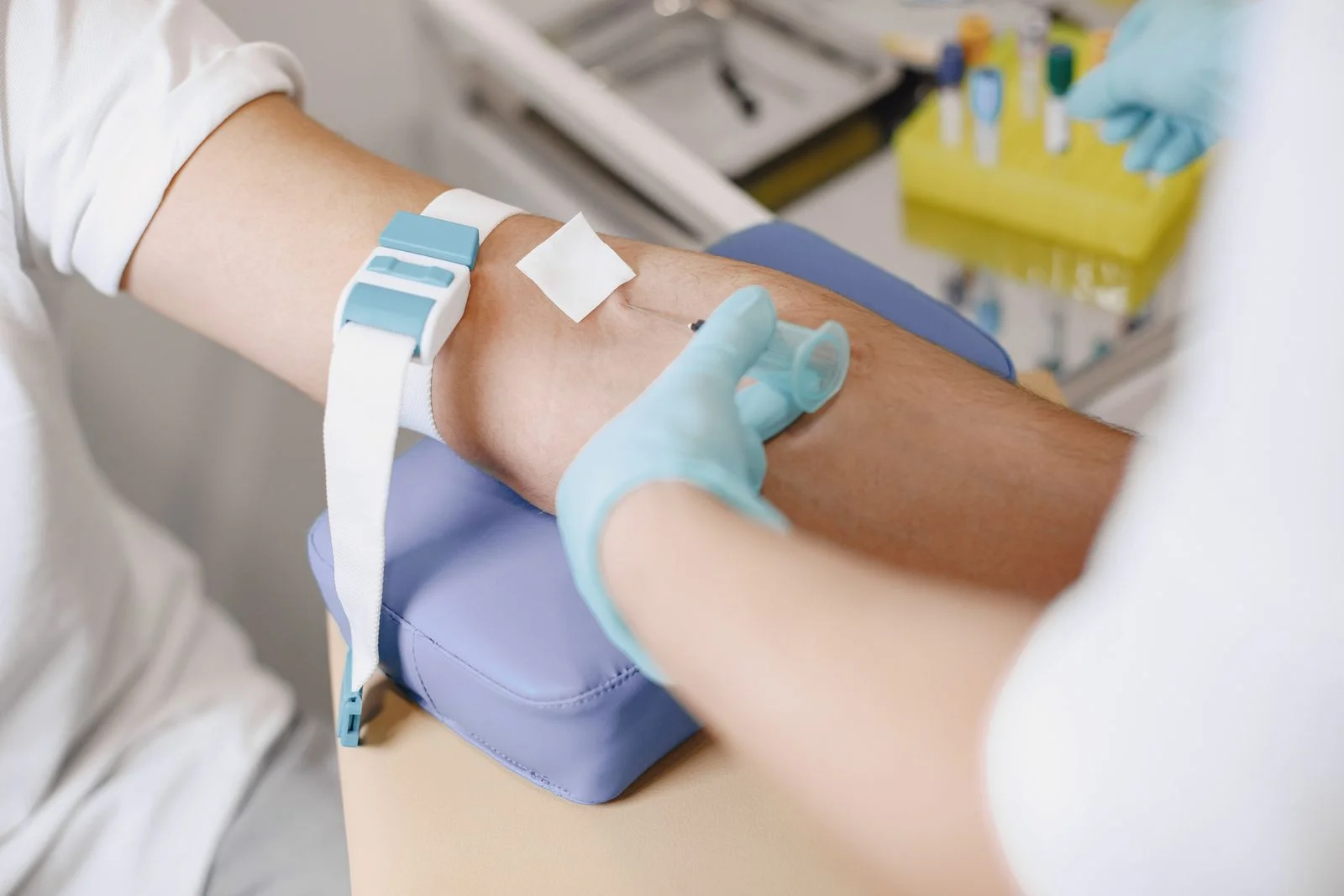
PRP stands for platelet-rich plasma. Platelets are the smallest cells in blood, best known for their role in clotting, but they also contain a dense payload of growth factors — including PDGF (platelet-derived growth factor), TGF-beta (transforming growth factor), VEGF (vascular endothelial growth factor), and several others — that play a central role in tissue repair and collagen synthesis. To prepare PRP for a facial treatment, a small volume of the patient's own blood (typically 10 to 20ml) is drawn and spun in a centrifuge at a calibrated speed and duration. This separates the blood into layers: red blood cells settle at the bottom, the platelet-poor plasma floats above, and the platelet-rich plasma — the therapeutically active layer — sits between them. This PRP is then activated and applied to the skin.
How PRP is delivered — and why the delivery method matters
PRP on the skin surface achieves very little. The growth factors are too large to penetrate intact stratum corneum. Effective PRP facial treatment always involves a delivery mechanism that creates channels into the dermis:
- Microneedling at House of Aetheria + PRP: the most common protocol. A medical microneedling device creates controlled micro-perforations across the treatment area. PRP is applied immediately before, during, and after needling, allowing growth factors to enter the dermis directly through the channels. The microneedling stimulus adds its own collagen-triggering benefit on top of the PRP growth factor delivery. For a full guide on microneedling for acne scars on Indian skin, including scar types and session timelines, that article covers the standalone treatment in detail.
- Direct micro-injection: PRP is injected in small quantities across specific zones using a fine needle or cannula. More precise but more invasive than the microneedling route. Used for targeted areas or in combination with other injectables.
- Meso-gun delivery: a specialised device delivers PRP through multiple small needles simultaneously. Falls between the first two options in terms of penetration depth and comfort.
What PRP actually does to skin — and what the evidence supports
| Outcome | Evidence Level | What's Actually Happening | Realistic Timeline |
|---|---|---|---|
| Improved skin texture and tone | Strong — multiple RCTs on PRP + microneedling | Growth factors stimulate fibroblast activity; new collagen laid down in structured pattern | 4–8 weeks; continues improving for 3 months |
| Reduction in fine surface lines | Moderate–Strong | Collagen synthesis fills dermal structure supporting fine lines | Visible at 6–8 weeks post-treatment |
| Acne scar improvement (atrophic) | Strong — well-documented in peer-reviewed literature | Growth factors accelerate remodelling of depressed scar collagen | Typically 3 sessions, 4 weeks apart |
| Pore appearance reduction | Moderate | Collagen thickening around follicular openings reduces visible pore diameter | 6–12 weeks |
| Deep volume restoration | Weak — not the right tool | PRP stimulates existing collagen but does not add structural volume | Not applicable; use fillers instead — see skin boosters vs fillers for a comparison |
| Pigmentation clearance | Weak standalone | PRP reduces post-inflammatory redness but does not target melanin | Combine with laser toning for pigmentation |
"My honest framing for PRP facials: it is one of the best treatments we have for skin quality — texture, luminosity, early line reduction, and acne scar improvement — because it uses the patient's own biology rather than a foreign substance. There is no allergy risk. There is no introducing something that doesn't belong. What I push back on is the social media version where PRP is presented as a cure for everything. It cannot add structural volume. It cannot clear deep pigmentation on its own. It is not a filler replacement or a laser replacement. It is a collagen stimulator. For skin quality concerns, it is excellent. For structural or pigment concerns, it is a supporting element in a broader plan, not the lead treatment." — Dr. Debjani Chakraborty, Lead Dermatologist, House of Aetheria
What a PRP facial session at House of Aetheria involves
The session begins with a topical numbing cream applied for 30 to 45 minutes. Blood is drawn while the numbing takes effect and spun in the centrifuge chairside. The PRP is prepared and the microneedling treatment is performed across the full face (or targeted zones, depending on the concern). PRP is applied throughout and immediately after. Total session time is 60 to 75 minutes. The face is red and slightly swollen for 24 to 48 hours — similar to a moderate sunburn in appearance, with full resolution by day three in most patients. Most patients see first visible results at 4 weeks and peak results at 3 months. The standard starting protocol is three sessions spaced four weeks apart, with annual maintenance thereafter.
If skin texture, acne scarring, or general skin quality is your concern and you want a treatment that works with your own biology rather than adding foreign substances, book a PRP facial consultation at House of Aetheria, Sector 65. We will assess whether PRP as a standalone or PRP combined with another modality gives you the most efficient result for your specific presentation.