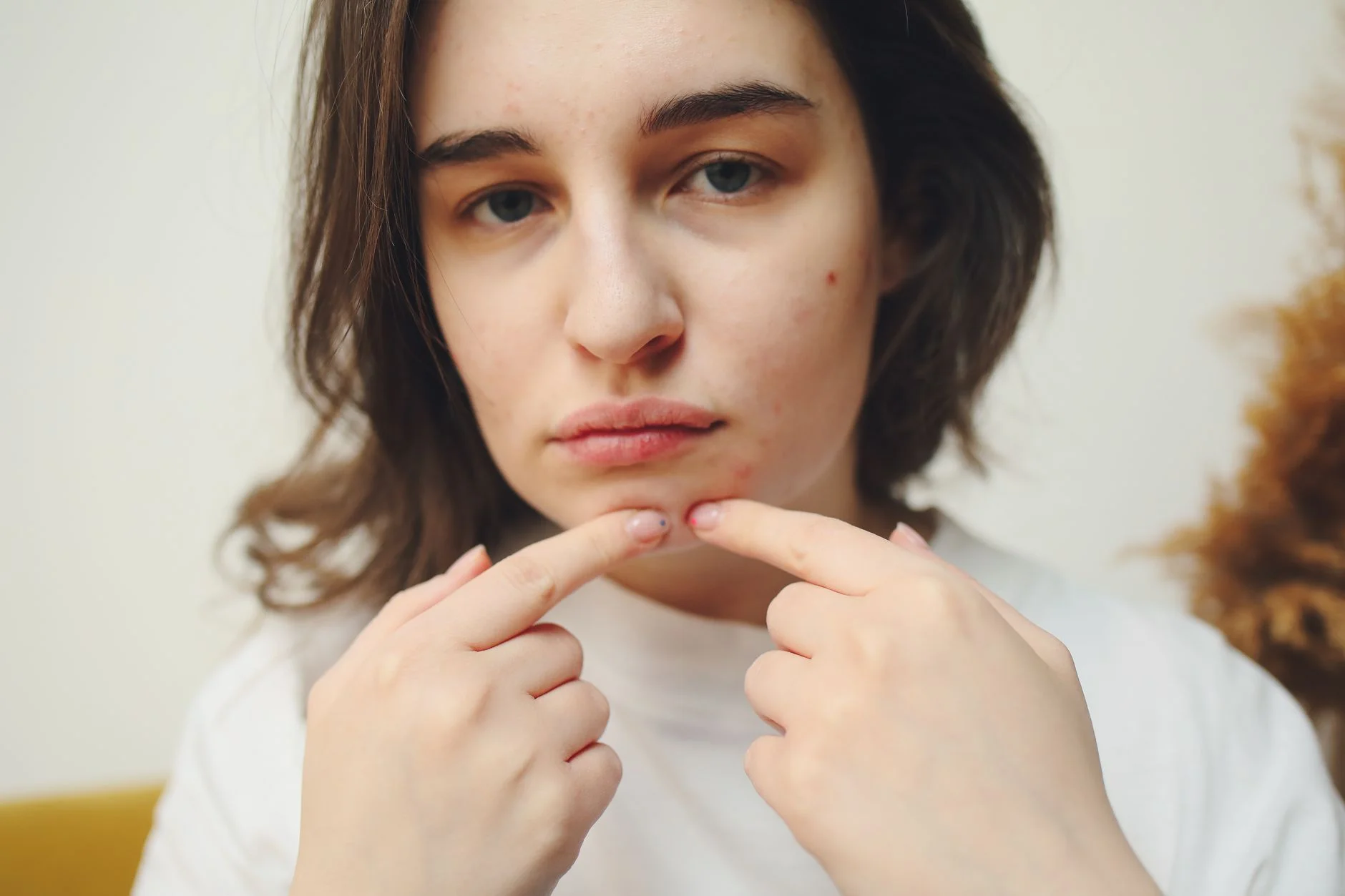
If you've been treating your acne scars for over a year without meaningful improvement, the treatment isn't necessarily wrong — it's almost certainly mismatched to your scar type.
Acne scars are not a single condition. They are at least three distinct structural problems, each with a different depth, different tissue damage pattern, and — most critically — a different treatment requirement. Using microneedling on ice pick scars is like trying to fill a pothole by paving over the surface. The tool must match the problem.
The Three Main Types of Atrophic Acne Scars
Atrophic scars — the depressed, sunken type — are the most common in Indian skin and are clinically classified by their shape and structural depth:
| Scar Type | Appearance | Depth | Frequency in Indian Skin |
|---|---|---|---|
| Ice Pick | Deep, narrow, V-shaped channel | Deep dermis | Very common |
| Rolling | Wave-like undulation, soft sloping edges | Subdermis | Common |
| Boxcar | Wide depression, sharp defined edges | Mid-dermis | Common |
| Hypertrophic / Keloid | Raised, thickened scar tissue | Epidermal overgrowth | Common in darker skin types |
Why Indian Skin Requires a Different Approach
Indian skin (Fitzpatrick types III–VI) is significantly more prone to post-inflammatory hyperpigmentation (PIH) than lighter skin types. Aggressive treatments involving thermal injury or excessive exfoliation can trigger dark marks layered on top of existing scars. Treatment selection for Indian skin must address both structural correction and PIH prevention — simultaneously, not one after the other.
Treatment Matching by Scar Type
Ice Pick Scars
Deep, narrow ice pick scars are notoriously resistant to surface-level treatments because the damage extends far into the dermis. The most effective clinical approach is the TCA CROSS technique (Chemical Reconstruction of Skin Scars) — a precise application of high-concentration trichloroacetic acid directly into each individual scar channel. This triggers a controlled inflammatory response and collagen deposition that fills the scar from the base upward, gradually over multiple sessions.
Surface treatments like standard microneedling or chemical peels applied broadly across the skin cannot reach the depth at which ice pick scars form.
Rolling Scars
Rolling scars are caused by fibrous tethering bands pulling the skin surface downward, creating the characteristic wave-like appearance. The treatment of choice is subcision — a minimally invasive procedure where a fine needle is inserted precisely under the scar to physically release these fibrous bands. Subcision is typically combined with PRP or dermal filler to fill the void left behind, then followed by RF microneedling to resurface and smooth the overlying skin.
Boxcar Scars
Boxcar scars respond well to RF microneedling and fractional laser resurfacing because their wider base allows heat energy to be distributed effectively across the scar floor, stimulating collagen remodelling throughout. Results improve progressively over 3 to 6 months, with multiple sessions typically required for meaningful correction.
Hypertrophic Scars and Keloids
Raised scars require the opposite approach entirely. Intralesional steroid injections reduce excess collagen production, combined with silicone gel therapy for ongoing scar management. Aggressive resurfacing treatments are contraindicated in active keloid-prone skin.
The Combination Approach — Because Most People Have More Than One Type
Most patients don't arrive with a single scar type. They have a combination — ice pick on the nose, rolling on the cheeks, boxcar across the jaw. A single treatment package rarely addresses all three meaningfully.
A structured acne scar programme at House of Aetheria begins with a detailed skin mapping assessment — scar type, depth, and distribution — before any treatment protocol is selected. A typical combined plan:
- Sessions 1–2: TCA CROSS for ice pick scars + subcision for rolling scars
- Sessions 3–4: RF Microneedling for overall resurfacing and boxcar correction
- Maintenance: Chemical peels to improve tone and address residual PIH
Realistic expectation: 40 to 70% improvement is achievable for most patients through a properly structured protocol. Complete erasure of deep scars is not a realistic outcome with any non-surgical treatment — and any clinic claiming otherwise is overpromising.
One Thing to Understand Before You Book Anything
If you've been using at-home derma rollers, vitamin C serums, or over-the-counter microneedling tools on your scars, you haven't wasted your time entirely. But you've been working at a depth that these tools cannot reach. The dermis responds to controlled injury in a clinical environment in ways that surface-level skincare simply cannot replicate.
Diagnosis first. The right treatment follows automatically. Patients with persistent pigmentation alongside scarring may also benefit from Laser Toning for Pigmentation as part of their combined protocol.