Laser hair removal works by sending light that dark hair absorbs. On darker Indian skin, the skin absorbs some of that light too. That is why the wavelength and the settings decide whether treatment is safe and effective.
Why dark skin needs more care
Melanin is the pigment in both hair and skin. The laser is meant to heat the hair root, but when the skin has more melanin, more of the energy lands in the skin. Used carelessly, that can cause burns or dark marks that last for months. Skin types IV to VI, common across India, call for the right wavelength and careful settings.
The three main wavelengths
| Laser | Wavelength | Suits | Notes |
|---|---|---|---|
| Alexandrite | 755 nm | Lighter skin, dark hair | Absorbed strongly by melanin, so not usually the first choice for dark skin |
| Diode | 810 nm | A wide range of skin tones | A balanced option, and widely used |
| Nd:YAG | 1064 nm | Darker skin | Goes deeper with less melanin absorption, so it is gentler on the skin, though fine hair responds less |
So which is best?
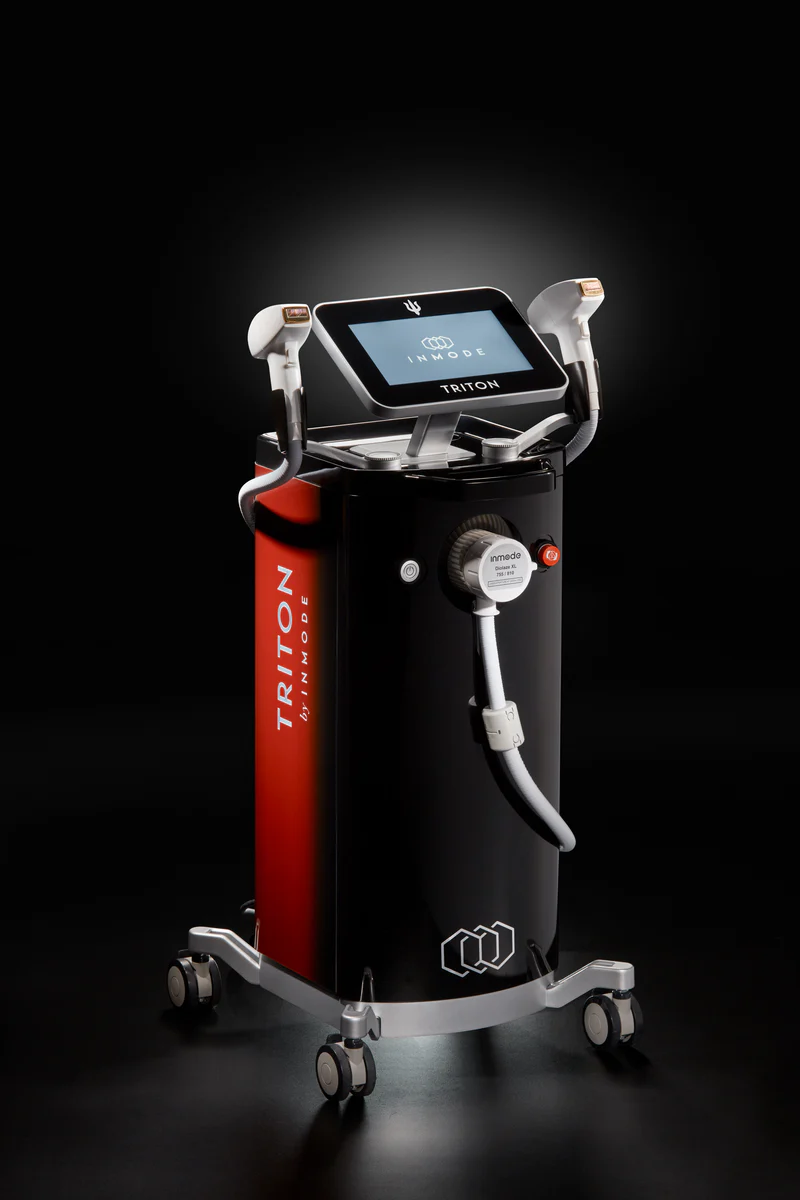
There is no single best laser for everyone. For darker skin, the 1064 nm Nd:YAG is usually the safest, and diode can work in many cases with the right settings. The best result often comes from a machine that offers more than one wavelength, so your doctor can choose for your skin and your hair. The InMode Triton at our clinic combines these three wavelengths in one platform.
Settings matter as much as the laser
- Pulse length and energy. Too much energy on dark skin causes burns.
- Cooling. Skin cooling protects the surface while the hair root is treated.
- A patch test. A small test area before full treatment shows how your skin responds.
- Sun. A recent tan raises the risk, so sun avoidance before and after matters.
Does skin tone change through the year?
Yes. Many people are a shade darker after summer, even without obvious sun exposure. Laser settings that suit your skin in winter may be too strong after a tan. A good clinic checks your skin at every session and adjusts. This is one reason treatment continues to need a doctor and not a fixed programme.
Hair colour and thickness matter too
Laser works best on dark, coarse hair. Fine, light or grey hair holds little pigment, so the laser has less to target, and results are more limited. Your doctor should tell you this at the first visit and not after several sessions.
Warning signs during or after a session
- Sharp, burning pain that is more than a warm snap
- Blisters, crusting or skin that turns grey or white
- Dark patches that appear in the days after a session
- Redness or swelling that lasts more than a day or two
Tell your clinic straight away if you notice any of these. Early attention makes a real difference.
Myths worth dropping
- "IPL is the same as laser." It is not. IPL uses broad light and is usually less suited to darker skin.
- "Lower price means the same result." Unsupervised treatment on dark skin is where most problems start.
- "It is permanent after one course." Laser gives long-lasting reduction, and some fine hair can return over the years.
What to ask your clinic
- Which laser and wavelengths do you use, and why for my skin?
- Will a doctor assess my skin and do a patch test first?
- Who will perform the treatment?
- How will you protect my skin from burns and dark marks?
Read our full guide on laser hair removal on Indian skin, or see how we plan treatment on our laser hair removal page.