You've noticed it in every Zoom call for the past year. Your eyes look heavy, tired, older than you feel. Maybe your upper lids have started to hood over, making it harder to apply eyeliner or, more practically, narrowing your peripheral vision while driving on the Expressway. Maybe the bags under your eyes have graduated from "mild puffiness" to permanent fixtures that no concealer or eye cream can address. Friends assume you're exhausted. You're not. You're dealing with structural changes in eyelid anatomy that creams, sleep, and even most non-surgical treatments cannot reverse. This is where blepharoplasty enters the conversation — a surgical solution that is, for the right patient, both functionally and aesthetically transformative.
What Blepharoplasty Actually Is (and Isn't)
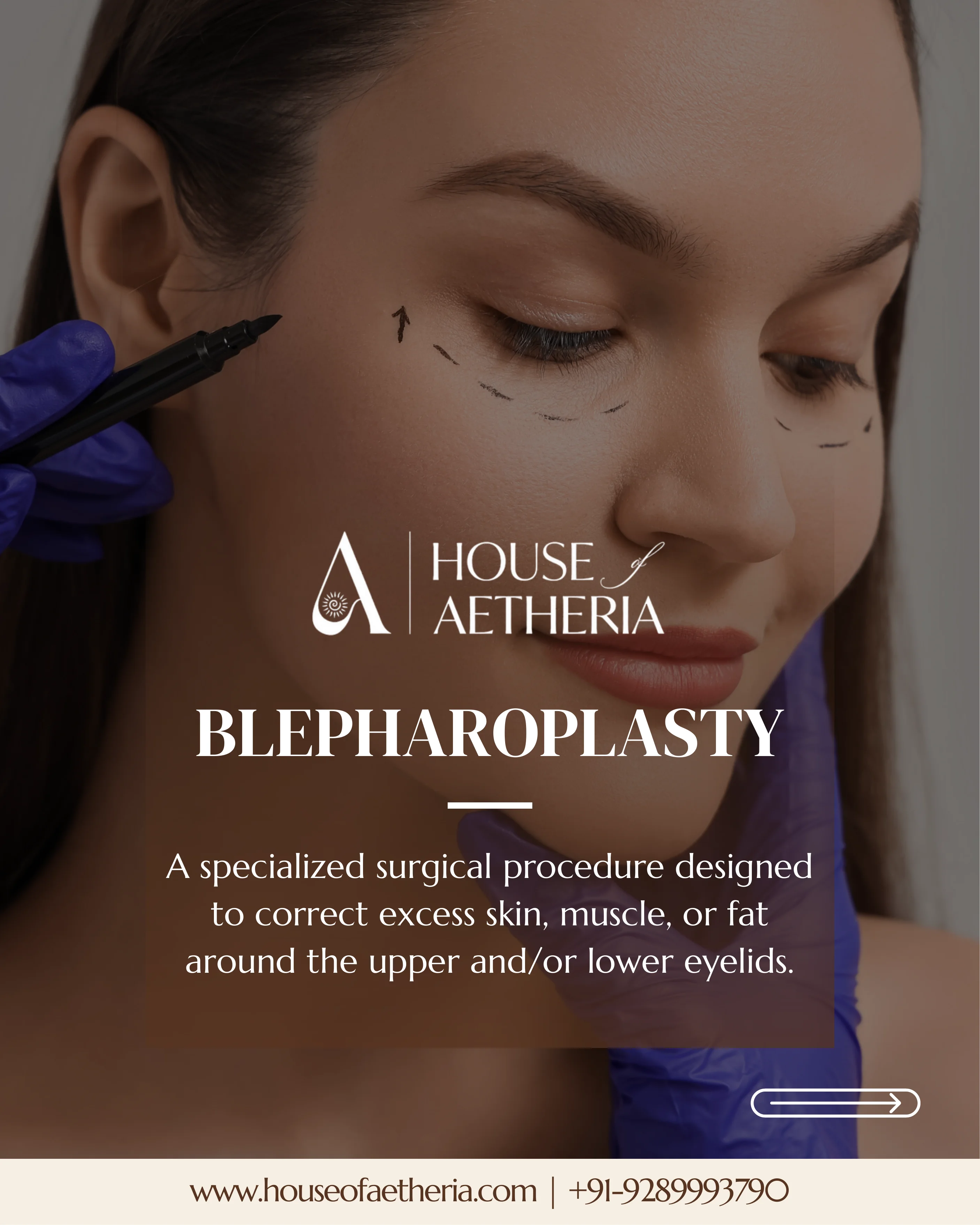
Blepharoplasty is the surgical correction of excess skin, muscle, and fat around the upper eyelids, lower eyelids, or both. Upper blepharoplasty removes redundant skin and sometimes a strip of orbicularis muscle that causes the heavy, hooded appearance. Lower blepharoplasty addresses fat herniation (the pouches that create visible under-eye bags) and, when needed, excess lower lid skin.
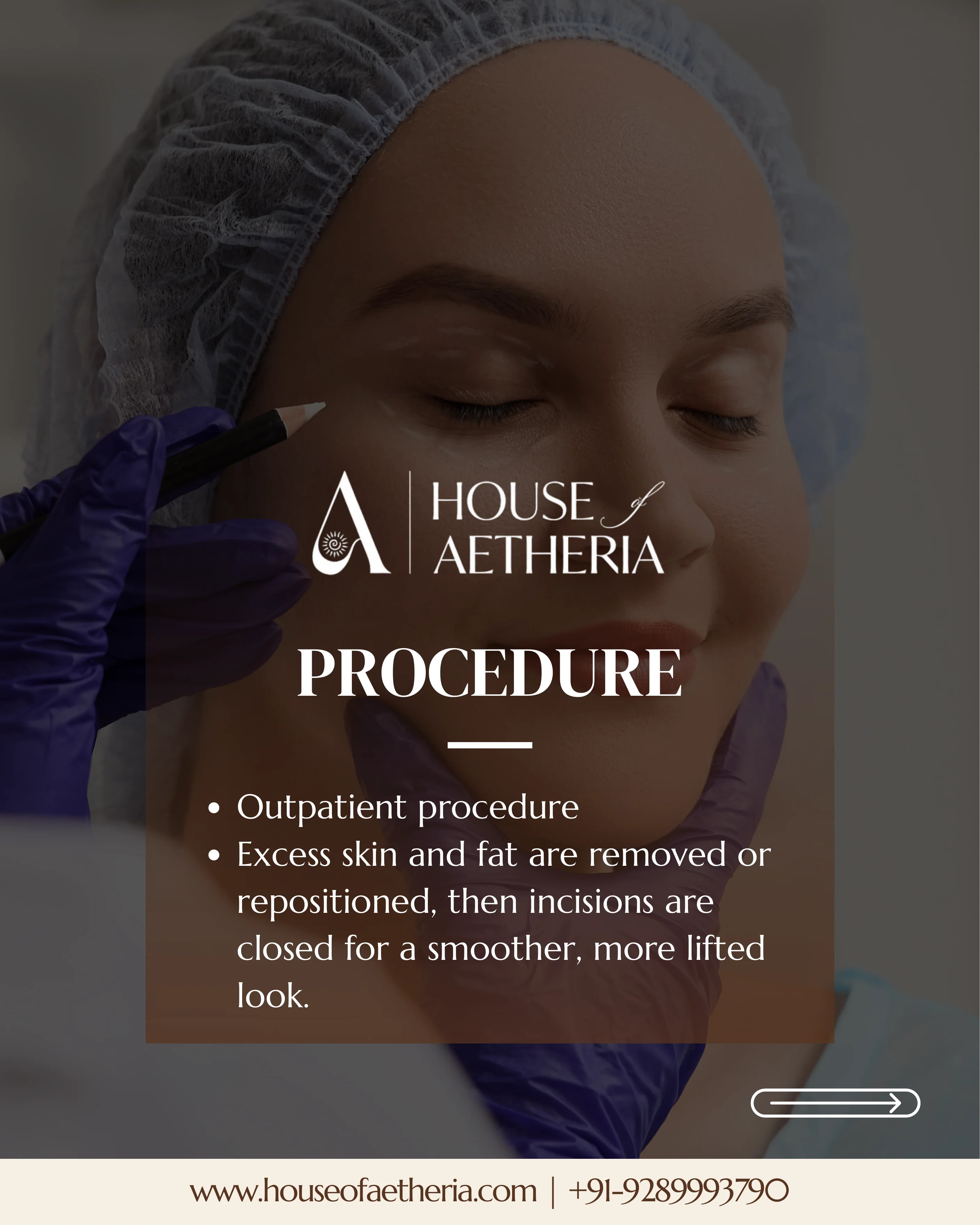
The procedure is performed under local anaesthesia with sedation in most cases. Incision placement depends on which lids are being treated:
- Upper lid: Incision placed within the natural eyelid crease — the scar becomes virtually invisible once healed
- Lower lid — transconjunctival: Incision made inside the eyelid, leaving no external scar; used when fat repositioning is needed without significant skin removal
- Lower lid — subciliary: Incision just below the lash line; used when excess lower lid skin also needs to be addressed alongside fat
Blepharoplasty is not a brow lift. It does not eliminate crow's feet. It does not change the shape or size of your eye. What it does, precisely, is restore the architecture of the eyelid to a more youthful and alert state while preserving ethnic identity.
That last point is critical for Indian patients. Done correctly, blepharoplasty should make you look like a well-rested version of yourself. Not a different person.
Why Indian Eyelid Anatomy Requires a Different Surgical Approach
Most blepharoplasty literature and training materials originate from Western surgical traditions, where the primary goal is often to address a single concern: upper lid skin excess in Caucasian anatomy. Indian eyelid anatomy presents a different set of considerations.
The Epicanthal Fold and Lid Structure
Many Indian patients, particularly those from North Indian and Northeast Indian backgrounds, have varying degrees of epicanthal folds. The position of the supratarsal crease (the natural fold line in the upper lid) is typically lower and less defined in Indian eyelids compared to Western eyelids. The amount of pre-aponeurotic fat is often greater, contributing to fullness even in younger patients. These are not "problems" to correct. They are anatomical features that must be respected and preserved during surgery.
Lower Lid Fat Distribution
In Indian patients, particularly those with Fitzpatrick skin types IV and V, lower eyelid ageing often presents as a combination of fat herniation and pigmentation. The fat pads in the lower lid (medial, central, and lateral) tend to herniate earlier and more prominently in some Indian genetic profiles, creating visible bags by the late 30s. The overlying skin darkening compounds the appearance, making under-eye bags look more severe than they might in lighter skin tones.
Upper Blepharoplasty vs. Lower Blepharoplasty: Who Needs What
Upper Eyelid Surgery
Upper blepharoplasty is appropriate when you have one or more of the following:
- Redundant upper lid skin that rests on or past the lash line
- A heavy, hooded appearance that worsens through the day
- Measurable visual field restriction (confirmed by a simple confrontation test or formal perimetry)
- Asymmetry between the two upper lids that bothers you consistently
- Difficulty wearing contact lenses or applying eye makeup due to excess skin
The surgery typically takes 45-60 minutes for both upper lids. In our practice, the most common reason patients come in late for upper blepharoplasty is that they assumed it was a purely cosmetic procedure with a long recovery. Upper lid surgery in particular has a relatively straightforward recovery of 10-14 days and addresses a functional concern (restricted field of vision) as much as an aesthetic one.
Lower Eyelid Surgery
Lower blepharoplasty is indicated when:
- You have visible fat herniation (puffy bags) that casts a shadow and creates a tired look
- Non-surgical options (fillers, PRP) have been tried and have not adequately addressed the concern
- Excess lower lid skin creates fine crepey lines that don't respond to laser or peels
- You have a deep tear trough with adjacent fat pouching that creates a double-contour deformity
Lower lid surgery is more nuanced. The transconjunctival approach (incision inside the lid) works well for younger patients who primarily have fat herniation without significant skin excess. Older patients with both fat herniation and loose skin may require a subciliary (external) approach with careful skin removal.
Combined Upper and Lower Blepharoplasty
We always assess both upper and lower lids together because treating one without evaluating the other often produces an incomplete result. If you correct heavy upper lids but leave prominent lower lid bags, the overall facial harmony isn't improved. Approximately 60% of our blepharoplasty patients opt for a combined procedure.
When Non-Surgical Alternatives Work (and When They Don't)
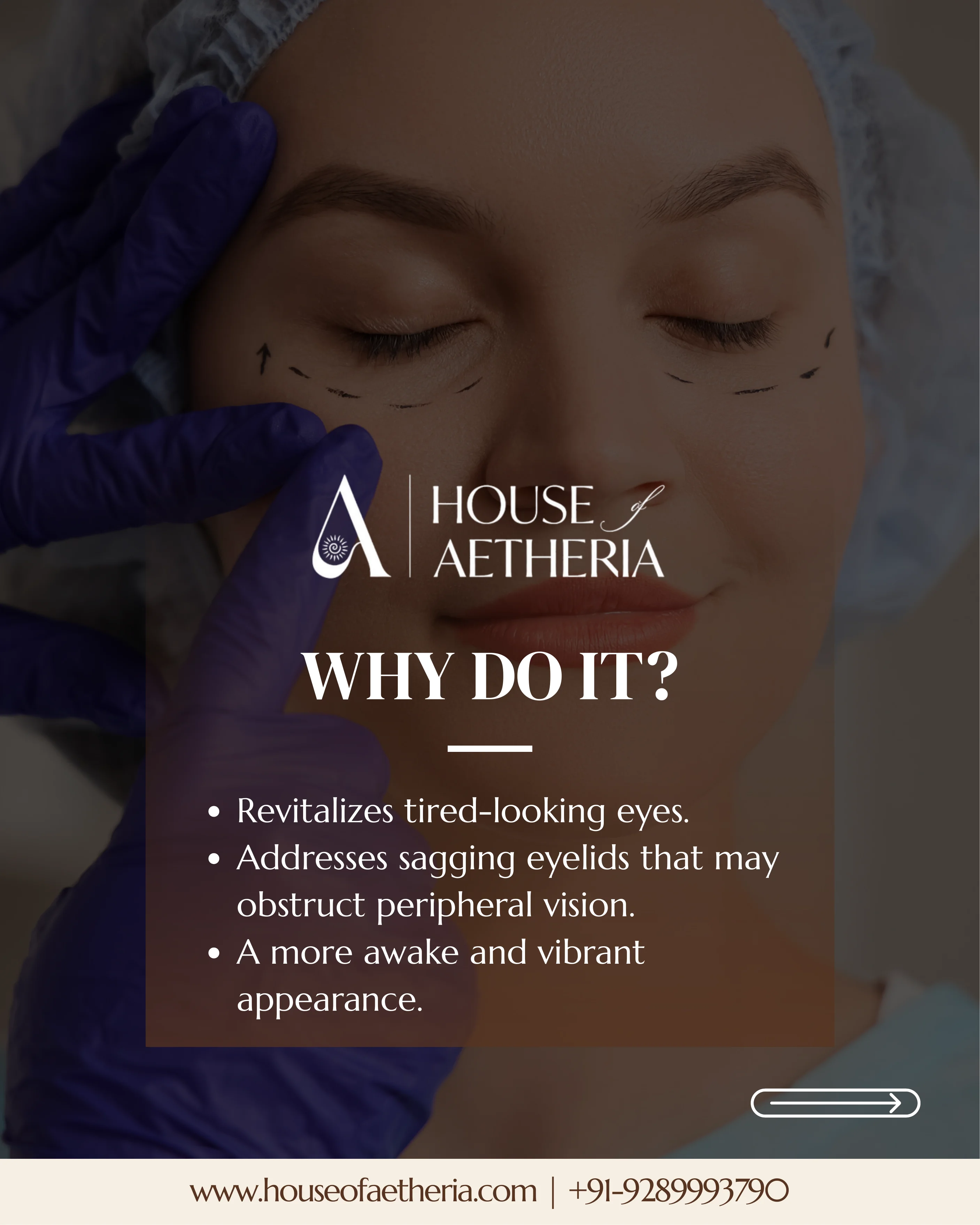
Not every tired-looking eye needs surgery. At House of Aetheria, we frequently see patients who benefit from non-surgical treatments and never need blepharoplasty. The distinction comes down to what's causing the problem.
Non-Surgical Options May Be Enough When
- Mild hollowing or volume loss under the eye (tear trough filler can address this)
- Early fine lines without structural skin excess (skin boosters, Profhilo, or fractional laser)
- Pigmentation-dominant dark circles without fat herniation
- Minimal upper lid heaviness that improves with brow positioning
Surgery Becomes Necessary When
- True fat herniation creates visible pouches that cast shadows
- Upper lid skin touches or covers the lash line
- Visual field is measurably restricted
- Skin laxity is significant enough that no amount of tightening or volumizing can correct it
Under-eye filler injected over herniated fat pads does not fix the problem. It adds volume on top of existing excess volume. The result is often a puffy, unnatural lower lid that looks worse than the original concern. We've had patients come to us after multiple rounds of filler injections that masked rather than treated the actual issue, and the first step was dissolving the filler before any surgical planning could begin.
Recovery Week by Week: What Actually Happens

Recovery is the primary source of anxiety for most blepharoplasty patients. Here's the realistic timeline we share during consultations:
1–3
Peak Swelling & Bruising
- Cold compresses: 10 minutes on, 10 minutes off
- Lubricating eye drops every 2–3 hours
- Sleep with head elevated on 2 pillows
- Mild discomfort rather than pain — eyes may feel tight
4–7
Bruising Transitions & Sutures Out
- Bruising shifts from purple to yellow-green
- Upper lid sutures removed between day 5 and day 7
- Most patients can read, watch screens, and move around comfortably by day 5
2
Return to Desk Work
- Residual swelling manageable with sunglasses
- Most patients back at desk-based work by day 10–14
- No strenuous exercise, bending, or heavy lifting
3–4
Swelling Resolves, Scars Flatten
- Swelling resolves substantially
- Scars in the eyelid crease begin to flatten and fade
- Light exercise can resume around week 3
2–3
Final Result Apparent
- Final result becomes fully visible
- Incision lines continue to mature and blend into the natural crease over 3–6 months
Living in Delhi-NCR: Why Timing and Post-Op Care Matter More Here
Recovery is manageable for most patients — but if you're based in Delhi-NCR, a few additional factors are worth planning for. Gurugram's climate and environment create specific post-operative considerations that we discuss at every pre-surgical consultation.
- Pollution months (November–January): The October-to-February window is our busiest for blepharoplasty, but peak AQI days require extra care. Avoid outdoor exposure during high-AQI days for the first two weeks. Use preservative-free lubricating drops more frequently — both pollution particulates and dry winter air increase eye irritation on healing incisions.
- Wedding season timing: Patients planning for a wedding — their own or a family member's — should schedule upper blepharoplasty at least 6-8 weeks before the event, and combined upper and lower procedures at least 10-12 weeks out. This allows complete resolution of swelling and scar maturation before photography and social events.
- Year-round UV exposure: UV index in Gurugram reaches 4-5 even on clear winter days. We prescribe SPF 50 sunscreen and recommend wrap-around sunglasses for the first 8 weeks post-surgery, without exception.
When Blepharoplasty Is Not the Right Choice
Responsible patient selection is as important as surgical technique. We advise against blepharoplasty or recommend deferral in the following situations:
- Active thyroid eye disease (Graves' ophthalmopathy): Eyelid position and fat distribution are unstable. Surgery should only be considered after the disease has been quiescent for at least 6 months, confirmed by an endocrinologist and ophthalmologist.
- Severe dry eye syndrome: Removing upper lid skin can worsen lagophthalmos (incomplete eye closure), which accelerates corneal drying. A Schirmer test score below 5mm warrants caution.
- Unrealistic expectations about wrinkle elimination: Blepharoplasty addresses skin excess and fat herniation. It does not eliminate crow's feet, forehead lines, or under-eye pigmentation.
- Uncontrolled bleeding disorders or anticoagulant therapy: Eyelid tissue is highly vascular. Surgical planning requires a washout period from blood thinners (typically 7-14 days depending on the specific medication), coordinated with your prescribing physician.
Making an Informed Decision
The right answer for tired-looking eyes might be surgery, a non-surgical protocol, or sometimes just better sun protection and consistent sleep. The only way to know is a thorough in-person evaluation where your eyelid anatomy, skin quality, tear film, and facial proportions are assessed together.
At House of Aetheria in Sector 65, Gurugram, Dr. Rahul Jain conducts detailed blepharoplasty consultations that include:
- Lid measurements and photography
- Assessment of tear film and dry eye risk before any surgical planning
- An honest conversation about whether surgery is the right step — or whether a less invasive approach will serve you better
If you've been thinking about this for a while, a consultation is a low-commitment way to get a clear, individually tailored answer. Book through our contact page or call the clinic directly.
Patient Results
Individual results may vary. Images are from actual patients treated at House of Aetheria. Posted with patient consent.Lower blepharoplasty · Dr. Rahul Jain, MCh Plastic Surgery · House of Aetheria, Gurugram
Upper & lower blepharoplasty · Dr. Rahul Jain, MCh Plastic Surgery · House of Aetheria, Gurugram
Frequently Asked Questions
Will blepharoplasty change the shape of my eyes or make them look Westernized?
No. When performed by a surgeon experienced with Indian eyelid anatomy, blepharoplasty preserves your natural eye shape and ethnic features. The goal is to remove excess skin and reposition fat to restore a rested, alert appearance. The epicanthal fold and natural crease position are respected and maintained throughout the procedure.
How long do blepharoplasty results last?
Upper blepharoplasty results typically last 7-10 years, sometimes longer, depending on genetics and skin quality. Lower blepharoplasty results tend to be longer lasting because repositioned or removed fat pads rarely recur. Ongoing sun protection and skin care help maintain results over time.
Can I combine blepharoplasty with other facial procedures?
Yes. Blepharoplasty is frequently combined with a brow lift, fat grafting to the midface, or non-surgical treatments like Botox for crow's feet. Combined procedures are planned to complement each other. At House of Aetheria, we assess the entire periorbital region rather than treating eyelids in isolation.
Is blepharoplasty covered by insurance in India?
Upper blepharoplasty may be partially covered when there is documented visual field restriction, as it qualifies as a functional procedure. You will need a formal visual field test (perimetry) and a referral from an ophthalmologist. Purely cosmetic blepharoplasty and lower lid procedures are typically not covered by Indian health insurance policies.