
Exosomes are not a skincare trend dressed up in science. They are one of the most rigorously studied regenerative tools in medicine right now — and the evidence for their role in hair follicle restoration is accumulating fast. If you are researching exosomes in Gurgaon for hair loss, here is what the clinical literature actually shows.
What Are Exosomes?
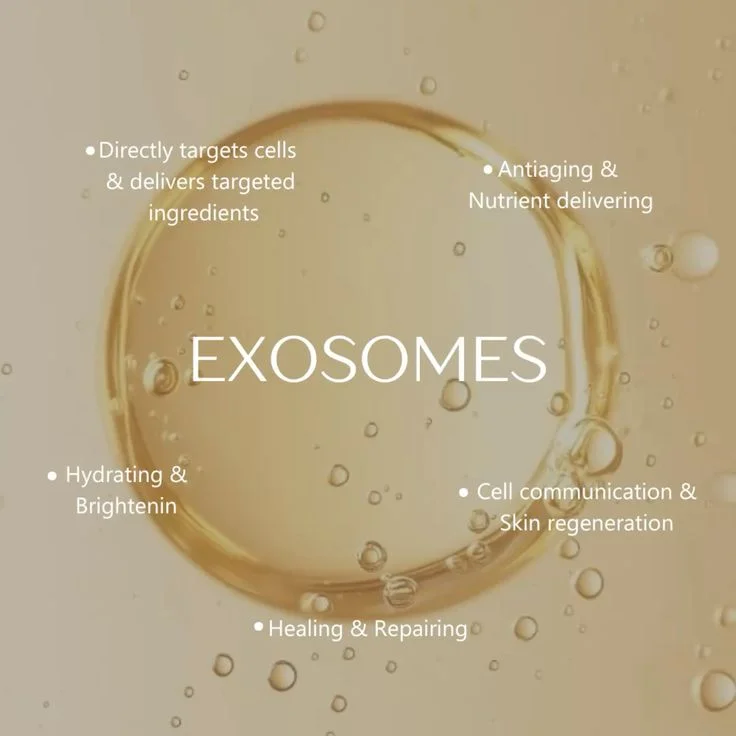
Exosomes are nano-sized extracellular vesicles — typically 30 to 150 nanometres in diameter — released by cells as a form of intercellular communication. They carry proteins, lipids, and genetic material (messenger RNA, microRNA) that instruct recipient cells to behave differently. Think of them as precision-coded messages delivered directly into the machinery of a target cell.
In the context of hair restoration, the exosomes used clinically are derived from mesenchymal stem cells — most commonly from adipose tissue, umbilical cord, or dermal papilla cells. They are acellular, meaning they carry none of the donor cell's nucleus or DNA. This makes them considerably safer than cell-based therapies and eliminates the risk of immune rejection.
They are not living cells. They do not replicate. What they do is deliver a dense payload of growth signals — at concentrations far exceeding what PRP can generate — directly into the scalp microenvironment.
How Exosomes Stimulate Hair Follicle Regeneration
Hair follicles cycle through three phases: anagen (active growth), catagen (transition), and telogen (rest). In androgenetic alopecia — the most common form of hair loss — follicles progressively miniaturise and spend less time in anagen. The result is finer, shorter hair with each cycle, eventually giving way to visible thinning.
Exosomes intervene at the signalling level. The primary mechanism is activation of the Wnt/β-catenin pathway — a key regulator of follicular growth that becomes suppressed in androgenetic alopecia. Research published in Science Advances demonstrated that exosomes enriched with miR-218-5p promote hair regeneration by downregulating SFRP2, an inhibitor of Wnt signalling, and upregulating β-catenin activity in follicular cells.
Beyond Wnt signalling, exosomes deliver a cocktail of growth factors — VEGF, IGF-1, KGF, and HGF — that extend the anagen phase, improve follicular vascularisation, reduce scalp inflammation, and support the dermal papilla cells that are central to follicle health. They also suppress the apoptosis (programmed cell death) that drives follicular miniaturisation under androgenic influence.
The mechanism is not just growth stimulation. It is follicular reprogramming — shifting the scalp's biology back toward an environment in which hair can actually grow.
What the Clinical Evidence Shows
The evidence base has grown considerably since 2022. A prospective study published in Aesthetic Plastic Surgery (2024) treated 30 male patients with androgenetic alopecia using mesenchymal stromal cell-derived exosomes injected into the scalp. Hair density at the vertex increased from 139 hairs/cm² at baseline to 175 hairs/cm² at follow-up — a meaningful, measured improvement with no adverse effects reported across the study period (PMID: 39174804).
A 2023 systematic review in the Journal of Cosmetic Dermatology by Gupta et al. — reviewing 16 studies on exosome treatment in hair restoration — found significant increases in both hair density and shaft thickness in androgenetic alopecia patients treated with adipose-derived stem cell exosomes. No significant adverse reactions were reported in any included study (PMID: 37381168).
A 2025 systematic review in Cureus comparing exosome therapy, PRP, and minoxidil across the clinical literature concluded that exosome therapy showed the most promising results for hair regrowth and long-term safety of the three modalities reviewed — with PRP offering moderate benefit and minoxidil requiring continuous use to maintain any effect.
Exosomes vs PRP — A Direct Comparison
PRP (platelet-rich plasma) has been a standard of care in regenerative hair treatment for over a decade. It works. But exosomes represent a meaningfully different approach — not a marginal upgrade.
The distinction worth understanding: PRP draws growth factors from your own blood platelets. The concentration depends on your platelet count, your age, your health status — variables that change. Exosome preparations are standardised, contain a far broader spectrum of bioactive molecules, and deliver a growth factor payload that is consistently higher than what PRP achieves.
| Factor | Exosome Therapy | PRP |
|---|---|---|
| Source | Mesenchymal stem cells (adipose, umbilical cord, or dermal papilla — acellular) | Patient's own blood — centrifuged to concentrate platelets |
| Growth factors | Broad-spectrum (VEGF, IGF-1, KGF, HGF, TGF-β) plus microRNA signalling — standardised concentration | PDGF, TGF-β, VEGF — concentration varies with patient biology |
| Sessions needed | Typically 1–3 sessions; results often visible after a single session | Typically 4–6 sessions over 3–6 months to establish response |
| Downtime | Minimal — mild scalp tenderness resolving within 24–48 hours | Mild soreness at injection sites; occasional temporary shedding |
| Results timeline | Visible improvement from 8–12 weeks; density gains at 3–6 months | Initial changes at 3–4 months; optimal results at 6–12 months |
| Immune rejection risk | None — acellular preparation carries no DNA or live cells | None — autologous (your own blood) |
Clinical parameters are indicative. Individual protocols vary based on assessment. Sources: Gupta et al., J Cosmet Dermatol 2023; Cureus systematic review 2025.
Who Is a Good Candidate for Exosome Hair Treatment?
Exosomes work best when there are still living follicles to respond to the signalling. They are a regenerative therapy — not a follicle replacement. Patients with completely bald areas where follicles have been absent for many years are unlikely to see meaningful regrowth from any injectable treatment.
The strongest candidates are those in the earlier to mid stages of hair loss — where thinning is visible but the follicles are miniaturised rather than absent. The best results are seen in:
- Men and women with androgenetic alopecia (Norwood II–V in men; Ludwig I–II in women)
- Diffuse thinning across the crown or frontal zone where follicles remain active
- Patients who have tried PRP but plateaued — or want fewer sessions with equivalent or greater efficacy
- Those with alopecia areata or telogen effluvium (stress-triggered hair loss), where inflammatory suppression and anagen re-entry are the primary goals
- Post-partum hair loss that has not self-resolved within 9–12 months
- Patients seeking a non-surgical approach before considering a hair transplant
A thorough trichoscopy assessment and patient history is essential before treatment. Not everyone presenting with hair thinning has androgenetic alopecia — and treating an active nutritional deficiency or thyroid imbalance with injectables alone will produce limited results.
What to Expect at House of Aetheria
Our approach to hair loss treatment in Gurgaon begins with diagnosis, not a treatment menu. Before recommending exosome therapy, we assess the pattern and density of loss via trichoscopy, review relevant bloodwork (thyroid, ferritin, DHT, hormonal panel), and take a detailed history. This determines whether exosomes are the right primary intervention — or whether they are best combined with scalp micro-needling, low-level laser therapy, or a nutritional correction protocol.
The exosome session itself takes approximately 45–60 minutes. The scalp is cleansed and a topical anaesthetic is applied. The exosome preparation is administered via micro-injections across the treatment zone — typically the crown, vertex, and frontal regions — using a fine-gauge needle. Most patients describe the procedure as mildly uncomfortable rather than painful. There is no incision, no blood draw, no recovery period. You leave the clinic the same day.
Mild redness or tenderness at injection sites typically resolves within 24 to 48 hours. We recommend avoiding vigorous scalp washing, swimming, or heat styling for 48 hours post-treatment. Hair washing with a gentle, sulphate-free shampoo can resume the following day.
Results are not instantaneous — the follicular biology takes time to respond. Most patients notice reduced shedding within four to six weeks. Visible density improvement is typically apparent at the three-month mark, with continued gain through six months. A maintenance session every six to twelve months sustains the result.
Hair loss is rarely straightforward. It involves genetics, hormones, nutrition, stress, and scalp health — often in combination. Exosomes address the signalling environment that underpins follicular function. They cannot do everything. But in the right patient, at the right stage of loss, they represent the most precise regenerative tool currently available in clinical practice.
If you are in Gurgaon and weighing your options for hair restoration, a consultation — rather than a treatment — is always the right starting point. Book one at House of Aetheria.
Frequently Asked Questions
How many sessions of exosome hair treatment are needed?
Most patients see meaningful improvement after 2–3 sessions spaced 4–6 weeks apart. A maintenance session every 6–12 months is recommended to sustain results. The exact protocol depends on your degree of hair loss and follicular health assessed at consultation.
What is the difference between exosomes and PRP for hair loss?
PRP uses growth factors derived from your own blood — its potency varies with your platelet count and age. Exosomes are standardised nano-vesicles derived from stem cells, carrying a consistent payload of growth factors, cytokines, and mRNA regardless of the patient's biology. Clinical studies show exosomes typically deliver more growth factors and produce more consistent results.
Are exosomes safe for hair treatment?
Yes. As acellular vesicles, exosomes carry no DNA and cannot replicate, removing theoretical risks associated with live cell therapies. The 2025 Cureus systematic review found no adverse effects across reviewed studies. At House of Aetheria, exosome preparations are pharmaceutical-grade and administered by qualified doctors.
Can exosome therapy treat complete baldness?
No. Exosomes reactivate and strengthen existing follicles — they cannot create new ones where none exist. If follicles are completely absent, there is nothing for the exosomes to signal. They work best in early to mid-stage hair loss where follicles are miniaturised but still present.
How long do exosome hair treatment results last?
Results from a full exosome course typically last 12–18 months, after which a single maintenance session is usually sufficient. Since exosomes address the underlying follicular signalling environment, results tend to be more durable than PRP alone. Individual longevity depends on the cause of hair loss and management of contributing factors.
Clinical References
- Gupta AK, Wang T, Rapaport JA. Systematic review of exosome treatment in hair restoration: Preliminary evidence, safety, and future directions. J Cosmet Dermatol. 2023;22(9):2424–2433. PMID 37381168
- Güngör S et al. Effectiveness of exosome treatment in androgenetic alopecia: Outcomes of a prospective study. Aesthetic Plast Surg. 2024. PMID 39174804
- From Cells to Strands: A Systematic Review Comparing Exosome Therapy, Platelet-Rich Plasma, and Minoxidil for Androgenetic Alopecia Treatment. Cureus. 2025. PMC12351504