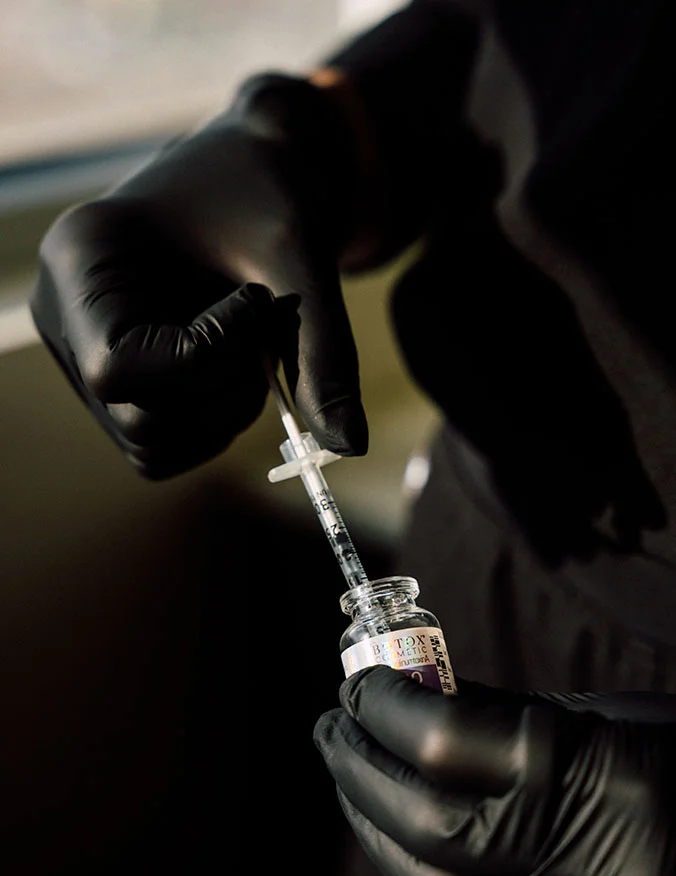
There's a conversation that happens in our consultation room more often than it should. A patient comes in, describes a Botox treatment they had somewhere else three months ago, and says: 'It worked for about two weeks, then it was like it had never happened.' They almost never consider the most obvious answer — that they simply didn't receive enough.
The units game is one of the least discussed practices in aesthetic medicine in India. It's not fraud in any dramatic sense. It's quieter than that, and it works precisely because most patients don't know enough to ask the right questions.
What a 'Unit' of Botox Actually Means
Botulinum toxin is priced and dispensed in units. A standard vial contains 100 units. For a forehead treatment, clinical guidelines typically recommend 10–20 units depending on muscle strength and desired effect. Crow's feet usually require 8–15 units per side. The '11 lines' between the brows typically need 15–25 units for an adequate result in most patients.
Here's where it gets interesting. A clinic can advertise 'Botox for ₹8,000' — and that number tells you almost nothing. It doesn't tell you how many units are in that price. It doesn't tell you what concentration the product was reconstituted at. It tells you the entry point for a treatment whose actual dose is determined after you've already agreed to pay.
The question isn't what a Botox session costs. It's how many units you received — and whether that dose was appropriate for your face.
How Underdosing Works in Practice
Botulinum toxin is typically supplied as a powder. Before use, it's reconstituted with saline — and the dilution ratio matters. A more dilute solution means fewer active units per millilitre. This is a legitimate clinical tool: dilution affects diffusion and can be appropriate for certain areas or effects. But it also means that two identical-looking syringes can contain very different amounts of active toxin.
A patient receiving 6 units across a forehead instead of 16 will see something. The skin may soften slightly. There may be a subtle reduction in movement. But it won't last — because the neuromuscular block was never complete. And when it fades in three to four weeks rather than three to four months, the clinic has the perfect excuse: 'Botox just doesn't last as long on some people.'
On the skin's surface, 6 units and 16 units look identical immediately after injection. The difference only becomes apparent over the following weeks.
The Three Questions That Protect You
Before any Botox treatment, ask three things explicitly. A clinic that hesitates on any of these questions is worth reconsidering. A physician-led clinic — where a named, qualified injector is responsible for your outcome — should be able to answer all three without a moment's pause.
Question 1
How Many Units?
Ask explicitly: how many units are included in this price? The answer should be a specific number, not a vague reference to 'areas' or 'sessions.'
Question 2
What Product?
Ask what brand is being used and what the reconstitution dilution is. Both affect the effective dose you receive per injection point.
Question 3
Can I See the Vial?
A legitimate clinic will show you the sealed product without hesitation. The packaging confirms brand, batch, and volume — your right to verify.
At House of Aetheria, Sector 65, Gurugram, all injectable treatments are administered by Dr. Sanyyam Shorey, our aesthetic physician, who assesses muscle strength, movement pattern, and your desired level of reduction before determining the appropriate dose. The number of units you receive is discussed, documented, and tailored — not averaged across a standard 'session' price.
Why This Matters Beyond the Money
Underdosed Botox is not just a poor value proposition. Repeatedly undertreated muscle tissue can behave unpredictably over time. Some patients who have had multiple insufficient treatments find that their muscles have adapted, and they require careful re-assessment before achieving the clean, predictable result they originally wanted.
There's also the trust dimension. When patients don't see the results they expected, they often blame the treatment or their own biology before they question the dose. This erodes confidence in injectable medicine broadly — which means real, well-administered treatments get unfairly tarred by the same brush.
What a Fair Botox Treatment Actually Looks Like
A fair anti-wrinkle injection session starts with a consultation, not a price card. Your injector should assess your face in motion — watching how your muscles move, identifying dominant areas, and discussing what 'natural' means to you. They should tell you the units they intend to use and why. They should be honest about what Botox can and cannot achieve for your specific concerns.
The result should last three to four months for dynamic wrinkles, with a gradual return to movement rather than a sudden reversal. If you've never had that experience from Botox, it's worth asking whether the dose you've been receiving has actually been adequate.
This isn't a complicated message: you deserve to know what's going into your face. Asking is not rude. Expecting an answer is not unreasonable. It's what good medical practice requires — and what every clinic should provide without being pushed.