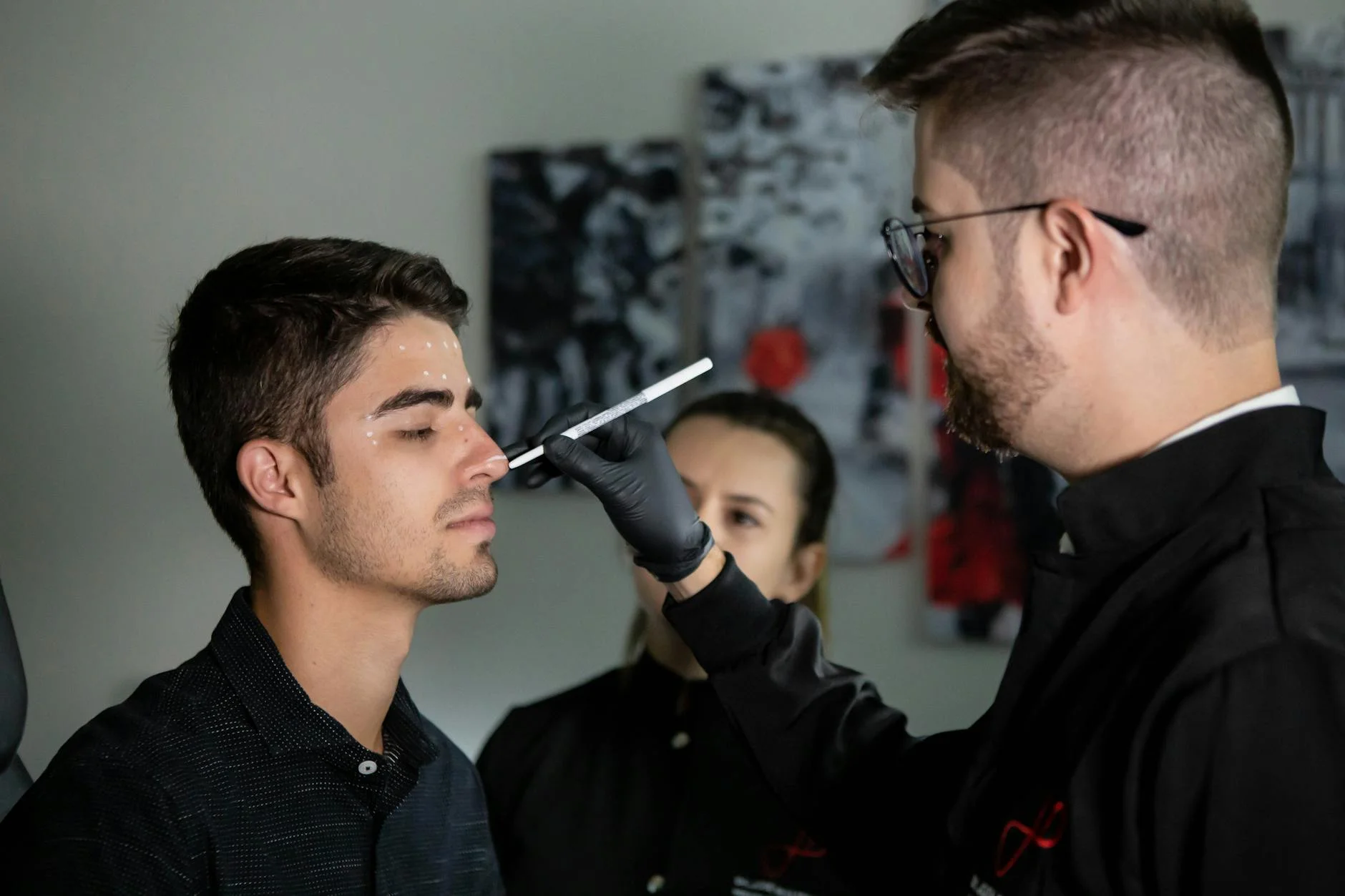
Male rhinoplasty demands a different set of aesthetic rules than female rhinoplasty. Every angle, every millimetre of projection, every decision about tip rotation must account for the fact that the male face tolerates certain changes well and punishes others. Get it wrong, and you don't just get a bad result. You get a feminised nose on a masculine face, which is one of the most difficult outcomes to reverse. This is why male nose surgery merits its own conversation, its own planning framework, and ideally a surgeon who has performed enough male rhinoplasties to understand the distinction instinctively.
If you're a man in Delhi-NCR considering nose reshaping surgery and you've been reading content clearly written with female patients in mind, this post is for you. I'll walk through the anatomical differences, the aesthetic targets, the surgical decisions, and the recovery specifics that make male rhinoplasty its own discipline.
What Makes Male Rhinoplasty Anatomically Distinct
The male nose is structurally different from the female nose in ways that directly influence surgical planning. These are not subtle variations. They change the instruments I reach for, the cartilage grafting strategy, and the degree of tip work I'm comfortable doing.
- Skin thickness is greater in men, particularly in the lower third and tip region, due to higher sebaceous gland density. This thicker skin envelope means fine refinements in cartilage architecture may not be visible post-healing.
- Nasal cartilage (both upper and lower lateral) is typically stronger and stiffer. This gives the nose more structural resistance during surgery but also means cartilage suturing and scoring techniques require more force and precision.
- The alar base is proportionally wider relative to the midface. Aggressive alar narrowing in men often looks unnatural.
- The nasofrontal angle (where the forehead meets the nose bridge) is shallower in men. A deep radix, which looks elegant on a female nose, reads as scooped out on a male face.
The single most common error in male rhinoplasty is tip over-rotation. In women, a nasolabial angle of 100-110 degrees looks attractive. In men, anything above 95-100 degrees starts to look upturned. A 90-100 degree nasolabial angle preserves masculine proportion. This one measurement separates a strong result from a feminised one.
What Male Patients Actually Want (And How It Differs From Female Patients)
In our practice, male rhinoplasty patients differ from female patients in one consistent way. They are far less likely to bring reference images and far more likely to describe functional concerns first. The conversation typically starts with "I can't breathe properly through my left nostril" or "I broke my nose playing cricket in college." The cosmetic request often surfaces second, framed as "while you're fixing it, can you straighten it?"
This is not a coincidence. Many of the men I operate on in Gurugram are professionals aged 25-40, often seeking aesthetic surgery for the first time. They're comfortable discussing a deviated septum but less comfortable articulating that they want their nose to look better. The surgeon's job is to hear both requests clearly and address both with equal rigour.
Male aesthetic goals, when articulated, tend to cluster around a few consistent themes:
- A straighter dorsal profile, especially after trauma-related deviation
- A defined but not pinched nasal tip
- Maintained or enhanced bridge height (rarely reduction)
- Correction of asymmetry without making the nose look "done"
- Improved nasal airflow alongside cosmetic improvement
The common thread is preservation of masculinity. No male patient has ever told me he wants a "cute" nose. The word I hear most often is "natural."
Septorhinoplasty: The Most Common Male Procedure at Our Clinic
Pure cosmetic rhinoplasty without functional correction is actually the minority case in my male practice. Most men present with some degree of septal deviation, often from old injuries, contact sports, or childhood fractures they never had treated. Functional rhinoplasty with breathing correction is frequently the clinical starting point.
Septorhinoplasty addresses both the internal architecture (septum, turbinates, internal nasal valve) and the external framework (bridge, tip, alar base) in a single operation. This combined approach avoids two separate surgeries and allows me to use harvested septal cartilage as grafting material for tip or dorsal work.
Septoplasty Alone
- Addresses internal septal deviation only
- No change to external nasal appearance
- Shorter operative time (45-60 minutes)
- Performed by ENT surgeons or plastic surgeons
- Appropriate when cosmetic concerns are absent
Septorhinoplasty
- Corrects septum, turbinates, AND external nasal shape
- Improves both airflow and aesthetics simultaneously
- Longer operative time (2-3.5 hours)
- Requires plastic surgery training for external work
- Best choice when both functional and cosmetic concerns exist
Open vs Closed Rhinoplasty: Which Technique for Men?
I use the open rhinoplasty technique for the majority of my male cases. The reason is straightforward. Male cartilage is stiffer and the corrections I'm asked to make (dorsal straightening, tip deprojection without over-rotation, asymmetry correction) require direct visualisation. A closed approach works well for isolated hump reduction or minor tip refinement, but for the complex septorhinoplasty cases that comprise most of my male caseload, open access is safer and more precise.
The columellar scar from an open approach fades to near-invisibility within 3-6 months. In over seven years of performing rhinoplasties, I have never had a male patient report that the scar was a concern at follow-up.
The Male Rhinoplasty Recovery Timeline: What to Realistically Expect
Men tend to experience longer post-operative swelling than women, primarily because of thicker skin. The skin envelope in male patients takes more time to re-drape over the refined cartilage framework underneath. Managing expectations around this timeline is critical.
Week 1
Nasal splint in place. Moderate bruising around the eyes (more pronounced in septorhinoplasty). Breathing through the mouth. No gym, no bending over, sleeping elevated at 30-45 degrees. Most patients take 7-10 days off work.
Weeks 2-4
Splint removed at day 7-10. Visible bruising resolves. Social presentability returns by day 14 for most men. Nose looks slightly swollen but straight. Light walking permitted. No contact sports.
Months 1-3
70-80% of swelling resolves. Tip definition begins to emerge. Nasal airflow improvement becomes noticeable as internal swelling settles. Gym and running can resume at 6 weeks. No contact sports until 3 months.
Months 6-18
Final 20-30% of swelling resolves. Tip takes longest due to thick male skin. Final result is typically visible at 12-18 months in men (vs 9-12 months in women with thinner skin).
The Delhi-NCR Male Patient: Context That Matters
Gurugram and Delhi-NCR have a specific patient profile that influences how I plan male rhinoplasties. The typical male patient I see is a corporate professional or entrepreneur, often in his late twenties to early forties. He has not had aesthetic surgery before. He's often researched nose reshaping surgery extensively online but is uncertain about the distinction between a cosmetic nose job and functional correction.
There are also environmental factors. Delhi-NCR's air quality, with AQI levels frequently exceeding 300 in winter, means many of these men have chronic nasal congestion layered on top of a structural deviation. Post-surgery, once the septum is straight and turbinates are addressed, they often report breathing improvements they didn't think were possible. They'd normalised partial nasal obstruction for years.
One pattern I've noticed repeatedly: men in Gurugram tend to delay rhinoplasty for years because they're unsure whom to consult. They see ENT surgeons for breathing concerns and dermatologists for skin concerns, but the combined functional-and-cosmetic case requires a plastic surgeon with rhinoplasty-specific training. Septorhinoplasty sits at the intersection of these disciplines, and clarity about who performs it best matters.
Risks and Complications: What Honest Disclosure Looks Like
Every surgical procedure carries risk. Male rhinoplasty-specific risks include:
- Prolonged tip swelling (thicker skin retains fluid longer)
- Under-correction of the tip due to the skin not contracting around the refined cartilage framework
- Pollybeak deformity (supratip fullness) if the thick skin doesn't re-drape properly
- Breathing changes if internal work is insufficient or over-aggressive
- Asymmetry, particularly if pre-existing trauma created significant cartilage warping
- Revision rhinoplasty rates of approximately 5-10% across published literature
The most common mistake patients make before consulting us is assuming that any surgeon who performs rhinoplasty understands the male-specific approach. Male and female rhinoplasty require different aesthetic endpoints, different angular measurements, and different cartilage handling. Asking your surgeon how many male rhinoplasties they perform annually, and what their revision rate is for male patients, is not rude. It's essential.
Frequently Asked Questions
Can rhinoplasty correct both my breathing and the appearance of my nose in one surgery?
Yes. Septorhinoplasty combines deviated septum correction with cosmetic nose reshaping in a single operation lasting 2-3.5 hours. This is the most common procedure we perform on male patients. Using a single surgery avoids double recovery periods and allows harvested septal cartilage to be used as grafting material for cosmetic improvements.
How long is the recovery after male nose surgery before I can return to work?
Most men return to desk-based work within 10-14 days. The nasal splint is removed at day 7-10. Visible bruising largely resolves by day 14. However, residual swelling persists for months and final results take 12-18 months in men due to thicker skin. Contact sports require a minimum 3-month hiatus.
Is male rhinoplasty different from female rhinoplasty?
Fundamentally, yes. Male rhinoplasty preserves a stronger dorsal profile, avoids tip over-rotation (maintaining a 90-100 degree nasolabial angle), and respects thicker skin that limits how much fine tip refinement is visible. Applying female rhinoplasty aesthetics to a male face produces a feminised result, which is one of the most common causes of male revision rhinoplasty.
What does rhinoplasty cost in Gurugram for men?
Cost varies significantly based on complexity. A primary septorhinoplasty in Gurugram typically ranges from ₹1.5 lakh to ₹3.5 lakh depending on whether it is cosmetic only, functional only, or combined, and whether cartilage grafting from the ear or rib is required. Revision rhinoplasty is more complex and costs more. We provide detailed cost breakdowns after clinical assessment and CT imaging review.
If you've been thinking about nose surgery and you're unsure whether your concern is cosmetic, functional, or both, that uncertainty is completely normal and actually the most common starting point for male patients at our clinic. A clinical consultation at House of Aetheria with CT scan review and a candid conversation about what is and isn't achievable for your specific anatomy takes about 45 minutes. You can book through our website at houseofaetheria.com or reach out directly. No pressure, no hard sell. Just an honest assessment from someone who does this every week.