Written by Dr. Akshay Jain, MD Dermatology | House of Aetheria, Gurugram
Root-Cause Skin Science · Integrative Pigmentation Management
Key Takeaways
- Melasma is hormonally driven — topicals treat the surface, but not the trigger.
- Indian skin (Fitzpatrick IV-VI) is prone to rebound pigmentation from aggressive treatments.
- Low-fluence Nd:YAG laser toning and mandelic/kojic acid peels are the safer protocols for darker skin.
- Tinted sunscreen with iron oxide blocks visible light — regular SPF alone is insufficient for melasma.
- A diagnostic consultation before any treatment is the single step most patients skip.
Melasma is a chronic pigmentation condition characterised by brown or grey-brown patches on the face — most commonly on the cheeks, forehead, and upper lip. It affects predominantly women of Indian and South Asian descent, driven by a combination of UV exposure, heat, and hormonal fluctuations that hypersensitise the skin's pigment-producing cells (melanocytes).
Why Does Melasma Keep Coming Back?
You've done everything right. SPF 50, every single morning, rain or shine. A vitamin C serum that costs more than your gym membership. Maybe even a round of peels at a reputed clinic. And yet — come March, when the Indian sun turns serious — that familiar shadowy patch across your cheekbones quietly reappears.
If this sounds familiar, you're far from alone. Melasma affects a significant proportion of Indian women, particularly those navigating their thirties and forties. It's also one of the most emotionally exhausting conditions to manage — because it lies to you. It fades through the cooler months, convincing you the expensive new routine finally worked. Then summer arrives, or stress does, and it's back, often darker than before.
The hard truth? Most treatments don't fail because the treatment was wrong. They fail because melasma is being treated as a skin condition, when it's actually a symptom of something deeper.
What Actually Causes Melasma — The Hormonal Link
Melasma is driven by melanocytes — the cells responsible for producing pigment. In healthy skin, these cells work in balance. In melasma, they've become hypersensitised.
What sets them off? A combination of UV exposure, ambient heat, and — most critically — hormonal fluctuations. Oestrogen and progesterone receptors in your skin cells directly stimulate melanin production. [JAAD 2014] That's precisely why melasma spikes during pregnancy, after starting oral contraceptives, or during the hormonal shifts of perimenopause.
Here's the fundamental problem: a brightening serum can't override a systemic hormonal signal. You can fade surface pigment, but if the underlying trigger is still active — an IUD, chronically elevated cortisol, an undiagnosed thyroid imbalance — those sensitised melanocytes will simply produce more. It's like bailing water without plugging the hole first.
Why Melasma Treatments Fail on Indian Skin
Indian skin sits in the melanin-rich range of the Fitzpatrick scale (typically Types IV-VI). This means two things: pigmentation develops more readily, and aggressive treatments carry a much higher risk of making things worse.
This is where clinical protocols often go wrong. Laser settings or acid concentrations that safely treat melasma on lighter skin tones can actively worsen it on Indian skin. Aggressive treatments trigger inflammation, and in melanin-rich skin, inflammation leads directly to more pigmentation — a rebound that leaves patients worse off than when they started.
Our approach to pigmentation begins with diagnostics, not devices. Before any laser or peel, we assess hormonal baseline, thyroid function, and stress markers. That information completely changes the treatment blueprint.
Treating skin in isolation — without investigating what's driving pigment to the surface — is exactly why so many patients cycle through expensive treatments with no lasting resolution.
Melasma Treatments That Work for Indian Skin
There's no single-session fix. What works is a layered approach that respects the skin's limits while steadily dismantling pigment.
Laser Toning (Nd:YAG)
- Best for deep / dermal pigment
- 6-10 sessions, spaced 3-4 weeks
- Safe for Fitzpatrick IV-VI at low fluence
- No downtime
- Low rebound risk if gradual
Targeted Chemical Peels
- Best for surface / epidermal pigment
- 4-6 sessions, spaced 3-4 weeks
- Safe with mandelic / kojic acid only
- 1-3 days mild peeling
- Low rebound risk with correct acid
Laser Toning — Low-Fluence Q-Switched Nd:YAG
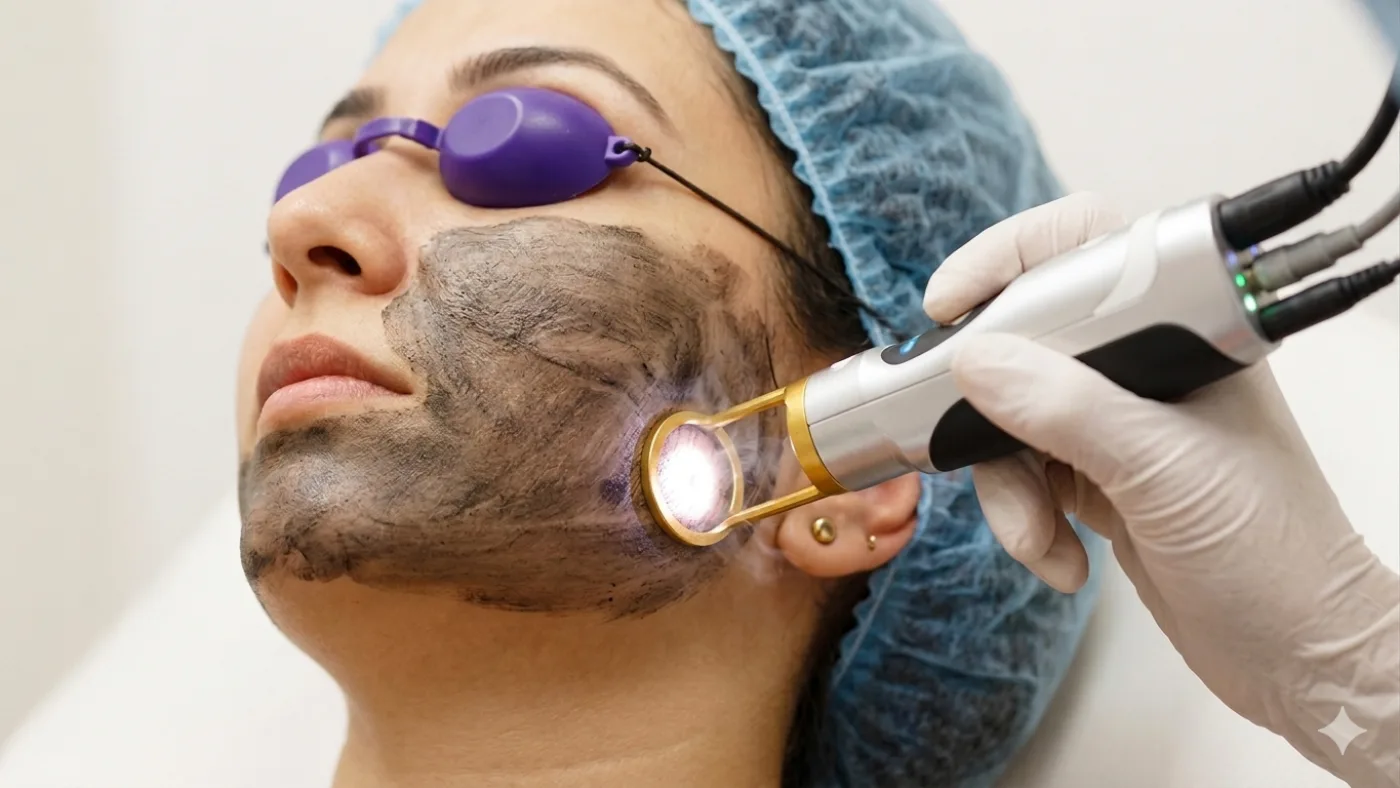
At conservative settings — lower fluence, more sessions spaced out — laser toning breaks down existing pigment without triggering inflammatory rebound. The operative word is gradual. Clinics that promise dramatic results in one or two sessions are often setting patients up for severe recurrence. Six to ten sessions, spaced three to four weeks apart, is a realistic and safe protocol for most patients.
Targeted Chemical Peels
Strong doesn't mean better. High-concentration glycolic acid is too aggressive for active melasma on Indian skin. Chemical peels formulated with mandelic acid, kojic acid, and phytic acid work more reliably — larger molecules, slower penetration, stable results without the irritation that triggers rebound pigmentation.
Topical Maintenance
Prescription-strength topicals keep melasma at bay between clinical sessions. Tyrosinase inhibitors — azelaic acid, tranexamic acid, and occasionally low-concentration hydroquinone (used carefully, under strict supervision) — help stabilise results and calm the melanocytes down. These aren't permanent solutions. They're holding strategies used between procedures.
Sun Protection — The Non-Negotiable
No treatment holds without it. And not just any SPF. For melasma, tinted sunscreens containing iron oxide are essential. Regular SPF blocks UV rays, but iron oxide also shields against visible light and blue light from screens — both proven drivers of melasma in darker skin tones. [JEADV 2019] Reapplication every two to three hours during daylight hours is non-negotiable.
How to Break the Melasma Cycle: The Diagnostic Approach
At House of Aetheria, we approach melasma through a diagnostic lens. Before recommending a single session of anything, we ask: what is actually driving this? Is it sun exposure alone, or is there an underlying hormonal component that needs to be addressed in parallel? This is where our approach to pigmentation differs from most clinic protocols — we assess before we treat.
It's not a complicated conversation. But it's the one that separates clinics treating symptoms from those treating causes.
If you've been through multiple treatment rounds, spent significantly on skincare, and your melasma keeps returning — it may not be that the treatment was wrong. It may simply be that the most important questions were never asked.
Frequently Asked Questions
Why does melasma keep coming back even after treatment?
Melasma returns because most treatments address the surface pigment but not the underlying trigger. Oestrogen and progesterone receptors in the skin directly stimulate melanin production, meaning hormonal factors — oral contraceptives, PCOS, perimenopause, chronically elevated cortisol — can override any topical or procedural treatment. Without identifying and managing the root cause, melasma will relapse every time a trigger is active.
Is laser toning for melasma safe on Indian skin?
Yes, when performed at the correct settings. Low-fluence Q-switched Nd:YAG (1064nm) laser toning is considered safe for Fitzpatrick IV-VI skin — the range that covers most Indian patients. The critical factor is conservative fluence settings and adequate spacing between sessions. High-energy sessions risk triggering post-inflammatory hyperpigmentation, which actively worsens melasma. At House of Aetheria in Gurugram, every patient's skin type and melanin reactivity is assessed before any parameters are selected.
How many laser or peel sessions does melasma treatment require?
There is no fixed number. Most patients need 6-10 sessions of laser toning spaced 3-4 weeks apart before visible stabilisation. Superficial chemical peels are often alternated between sessions to address surface pigment. Hormonal melasma typically requires ongoing maintenance rather than a defined course. Attempting to accelerate results by shortening session gaps or increasing intensity tends to cause rebound — adding sessions rather than reducing them.
Which sunscreen is best for melasma on Indian skin?
A broad-spectrum SPF 50 tinted sunscreen with iron oxide is the correct choice for melasma. Iron oxide provides a physical barrier against visible light and blue light from screens — both independent triggers of melanin overproduction in darker skin tones, in addition to UV. Regular SPF alone is not sufficient for melasma management. Reapplication every 2-3 hours during daylight hours is essential.
How does melasma treatment at House of Aetheria in Gurugram differ from standard protocols?
At House of Aetheria, every melasma consultation begins with diagnostics rather than a treatment recommendation. Before any procedure, we assess hormonal profile, thyroid function, and skin type. If a systemic driver is identified, it is addressed through our functional medicine team in parallel with dermatological treatment. Our approach is deliberately gradual — lower intensity, more sessions, more durable results — because in Indian skin, aggressive treatment is almost always counterproductive.