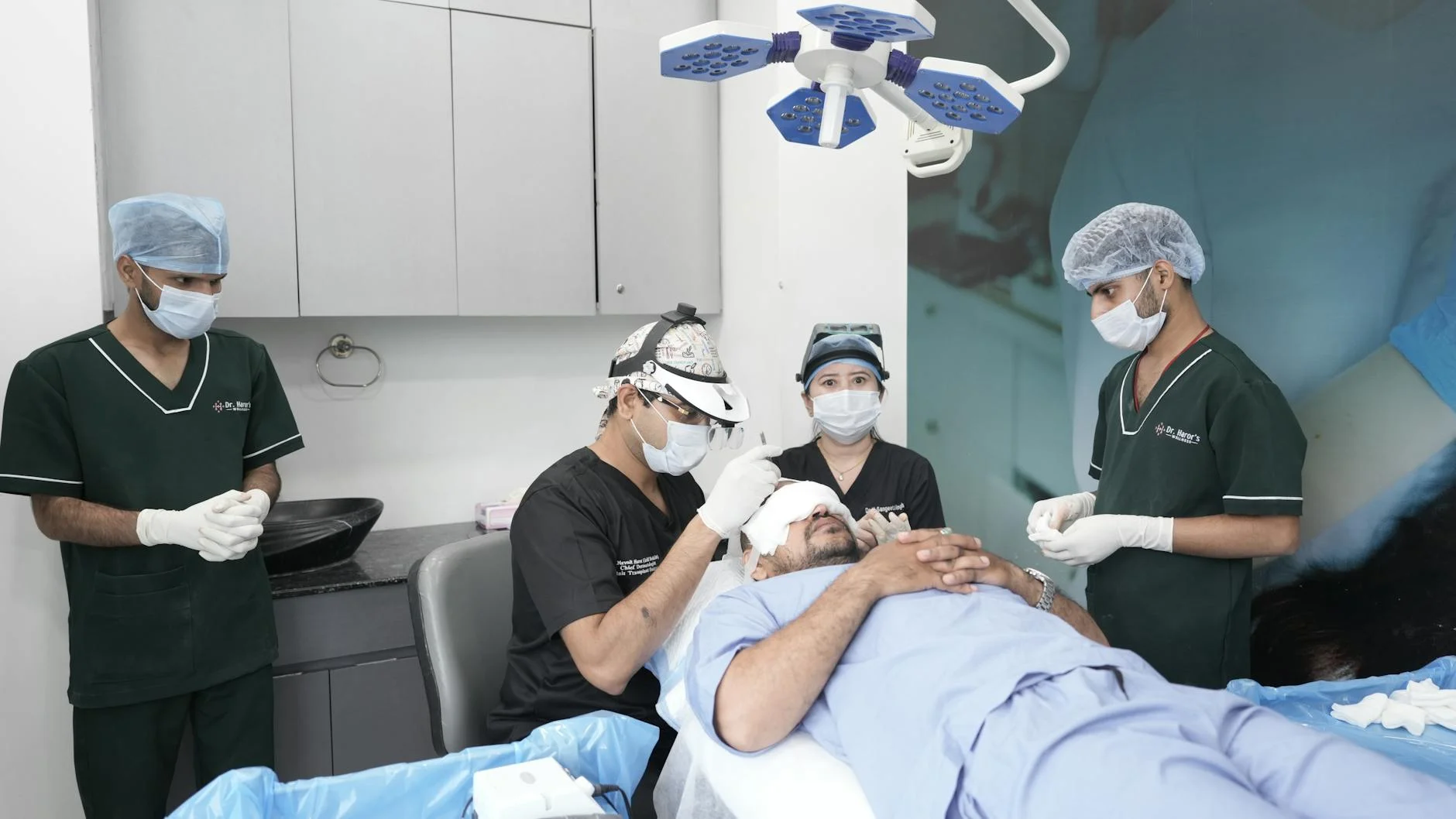
Most unnatural hair transplants are not surgical failures. They are planning failures.
The grafts survived. The hair grew. The problem is that the result does not belong to the face it was transplanted onto. The hairline sits too low, the density is packed unnaturally at the front, the temple angles ignore facial structure, or the donor has been overharvested so aggressively that the back of the scalp now looks moth-eaten under short hair.
This is the difference between implantation and design.
Why Graft Counts Are the Wrong Conversation
In Gurgaon, the market has become obsessed with graft counts because numbers are easy to advertise. Five thousand grafts sounds impressive to someone who has never examined donor economics clinically. But the best transplant outcomes are rarely the highest graft-count procedures. They are the best designed.
Hairline Design Is Architecture
A natural male hairline is irregular. Not messy — irregular. Micro-asymmetry, softer temporal transitions, variable follicular-unit distribution, and age-appropriate recession are what make a transplanted hairline disappear visually into the face.
The opposite is what creates the instantly recognisable "transplant look".
The common design errors: hairlines placed too low for the patient's age; straight-line frontal construction; excessively dense frontal rows with no gradient transition; incorrect temple angulation; multi-hair grafts implanted at the very front edge; ignoring future loss progression.
A 28-year-old who insists on the hairline he had at 17 is usually asking for a result that will look unnatural by 35.
"Good transplant surgery is conservative surgery. The goal is not to maximise graft usage today. The goal is to create a hairline that still looks believable fifteen years from now."
— Dr. Rahul Jain, MCh Plastic Surgery, House of Aetheria
The Donor Problem Most Patients Underestimate
Every patient has a finite donor reserve. Indian donor density averages roughly 78 follicular units per cm². That reserve must potentially support decades of progressive loss. Clinics that aggressively overharvest to produce dramatic front-loaded marketing results often create visible depletion in the donor zone — particularly under bright lighting or shorter hairstyles.
Why Density Transition Matters
The frontal scalp is not uniformly dense naturally. Real hairlines transition gradually from finer calibre hairs at the edge into progressively denser grouping further behind. Replicating that transition is one of the biggest distinctions between technician-driven assembly-line clinics and surgeon-led aesthetic restoration.
Native hair exits the scalp at highly specific directional angles. Even technically healthy grafts look artificial if those angles are wrong. Hair that grows upright at the frontal edge instead of lying naturally with facial movement creates the "plugged" appearance patients fear.
The Premature Transplantation Problem
Another Gurgaon trend creating poor outcomes: premature transplantation. Many younger patients seek surgery before stabilising active loss medically. That creates a transplanted island surrounded by continuing recession behind it. Five years later, the transplant remains while native hair disappears around it — creating separation lines that expose the surgery visually.
This is why proper transplant planning includes Norwood pattern prediction, miniaturisation assessment, family-history analysis, donor mapping, medical stabilisation before surgery, and long-term graft budgeting.
The Procedure Itself Matters — But Not the Way Clinics Market It
FUE / DHI hair transplant techniques are not magical competing technologies despite the way clinics market them. Both are extraction-and-implantation techniques with different implantation workflows. A poor surgeon using DHI still produces poor outcomes. A skilled surgeon using FUE can produce exceptionally natural restoration.
The conversation patients should really be having is not "Which technique?" but "Who designed the hairline, who implanted it, and how was donor preservation planned?" Read our deeper explainer: FUE vs DHI hair transplant — what nobody tells you.
What This Surgery Cannot Do
It cannot create unlimited density. It cannot permanently stop future hair loss outside transplanted areas. It cannot ethically deliver adolescent density using a limited donor reserve. And it cannot compensate for poor planning with more grafts later.
The best hair transplant is usually the one nobody notices.
How We Approach It at House of Aetheria
At House of Aetheria, every transplant begins with facial analysis, donor assessment, miniaturisation mapping, and a long-term progression discussion before any graft number is quoted. Transplantation is not a transaction. It is a lifetime design decision. Part of our hair restoration programme in Gurgaon.