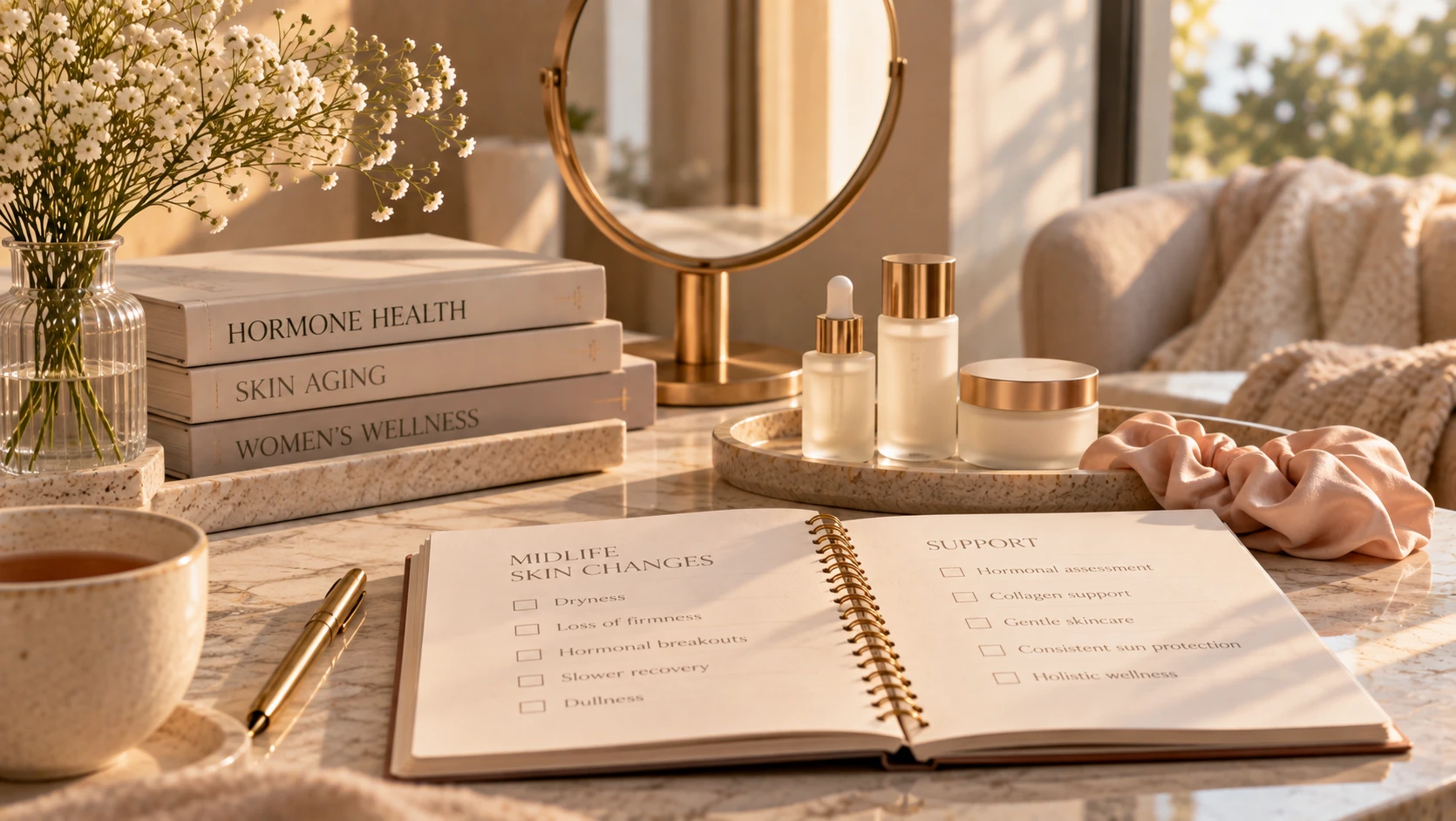
Somewhere in the mid-to-late forties, a lot of women notice their skin changing in a way that feels different from ordinary ageing. It's drier than it used to be, less bouncy, more prone to sudden breakouts along the jaw despite being decades past the acne-prone years, and slower to recover from anything, a bad night's sleep, a new product, a stressful week. Most people call this "just getting older." What's actually happening has a name and a mechanism, and it's called perimenopause.
Why Oestrogen Decline Hits Skin So Directly
Oestrogen plays a direct role in collagen production, skin thickness, and the skin's ability to hold onto water. As oestrogen levels start fluctuating and gradually declining during perimenopause, often starting years before menopause itself, skin can lose collagen at a notably faster rate than the gradual decline associated with chronological ageing alone. This is why the change often feels sudden rather than slow, because the hormonal shift itself isn't perfectly gradual either.
The drop in oestrogen also affects the skin barrier's ability to retain moisture, which is the mechanism behind the sudden dryness so many women describe, sometimes in skin that was oily or combination for their entire adult life before this point.
Why Breakouts Return in Your 40s
Oestrogen decline shifts the relative balance toward androgens, even without androgen levels themselves rising, and that shift can trigger hormonal breakouts along the jaw and chin, the same pattern seen in adult hormonal acne more broadly. Treating this with products built for teenage acne, harsh, drying, stripping formulations, tends to make things worse rather than better, since perimenopausal skin is simultaneously more breakout-prone and more barrier-compromised than it was at twenty.
The Root-Cause Piece Most Skincare Misses
This is a hormonal problem showing up on the skin, and topical treatment alone addresses the surface, not the underlying shift. A proper assessment looks at your actual hormonal picture, alongside other systems that interact with it, since thyroid function and gut health both independently affect skin and frequently shift around the same life stage as perimenopause itself. Addressing skin changes without asking what's driving them is the same limitation we've written about in our gut-skin connection piece, just with a different underlying driver in this case.
What Actually Helps
Collagen-supporting in-clinic treatment. Treatments that stimulate the skin's own collagen production, rather than simply hydrating the surface, address the mechanism directly rather than compensating for it temporarily.
Barrier-focused skincare, not aggressive skincare. As the skin barrier weakens during this transition, gentler, more supportive formulations generally outperform strong actives used aggressively, even if those same actives worked well a decade earlier.
A genuine hormonal assessment where indicated. Not every skin change in your forties needs bloodwork, but persistent, significant change that isn't responding to appropriate skincare and in-clinic treatment is worth investigating properly rather than assuming it's simply age.
Consistent sun protection. UV exposure accelerates collagen breakdown at exactly the life stage when collagen production is already declining, making daily sunscreen more, not less, important during this window.
This Isn't Just a Skin Conversation
Perimenopause affects sleep, mood, and energy alongside skin, and a clinic that only looks at the skin in isolation is treating one visible symptom of a broader shift. That's part of why this is discussed as a whole picture during consultation, not a skin-only visit followed by a separate, disconnected conversation elsewhere.
Frequently Asked Questions
How do I know if my skin changes are perimenopause or just normal ageing?
Timing and pace are the biggest clues. A relatively sudden shift, rather than a gradual one, occurring anywhere from the mid-thirties to late forties, alongside other changes like irregular cycles or new sleep disruption, points toward a hormonal driver worth investigating.
Is this reversible, or just something to manage?
The hormonal decline itself isn't reversible, but its visible effects on skin, dryness, breakouts, and collagen loss, respond well to the right combination of in-clinic treatment and skincare adjustment, even without changing the underlying hormonal picture.
Should I see a gynaecologist or a dermatologist for this?
Ideally both perspectives inform the plan. A dermatologist addresses the visible skin changes directly, while broader hormonal management, if needed, sits with your gynaecologist, and coordinating the two gives a more complete picture than either alone.
At what age does this typically start?
Perimenopause commonly begins in the mid-to-late forties for most women, though it can start earlier, sometimes in the mid-thirties, which is part of why skin changes at that age are worth taking seriously rather than dismissing as premature.