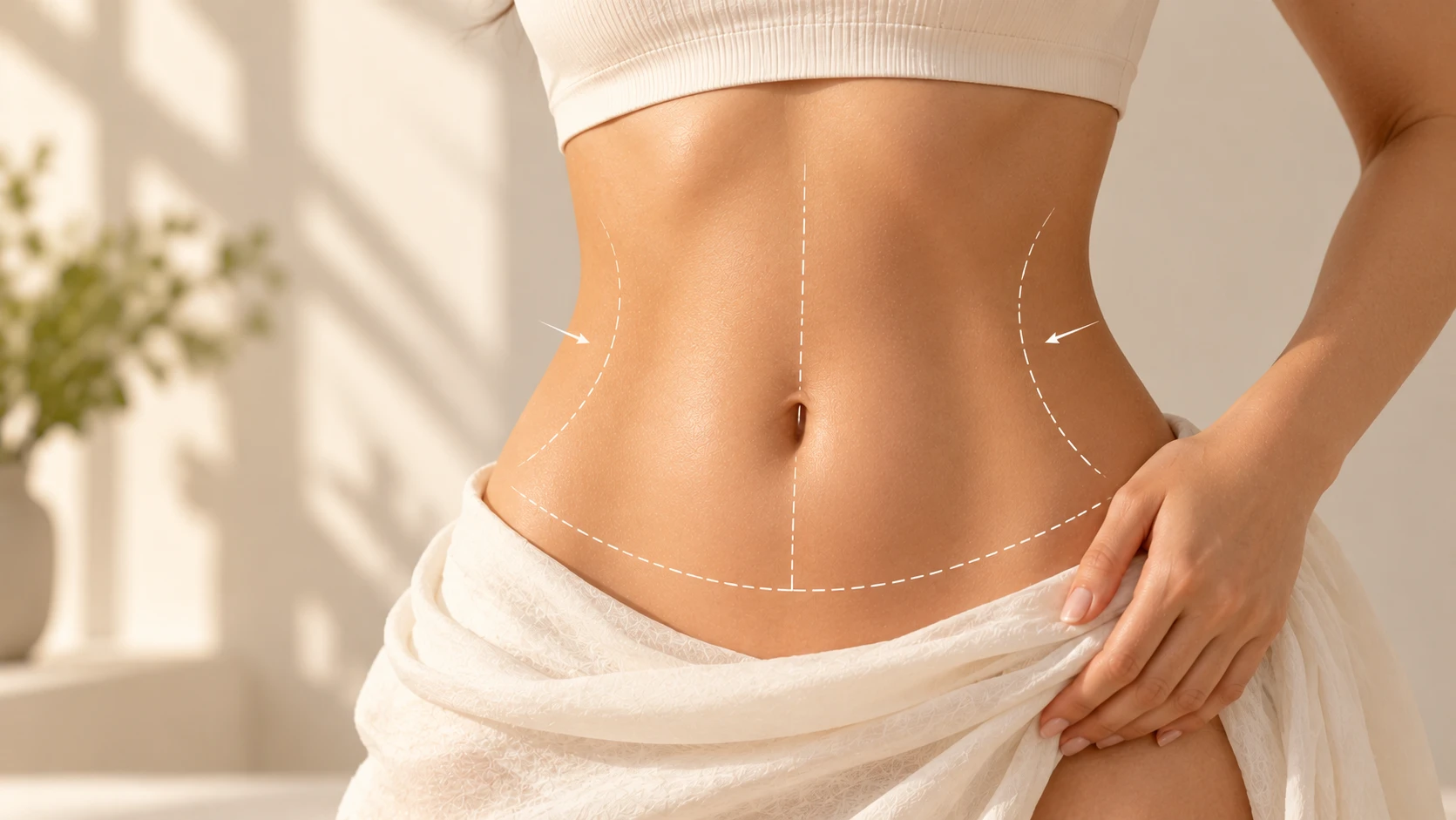
A tummy tuck, or abdominoplasty, is a surgical procedure designed to flatten the abdomen by removing excess fat and skin, and tightening the muscles of the abdominal wall. In Gurgaon, this procedure addresses concerns that diet and exercise alone cannot resolve, such as stretched skin after pregnancy or significant weight loss, helping to restore a firmer, more contoured midsection.
Key Takeaways
- A tummy tuck removes loose skin and fat, and tightens abdominal muscles for a flatter stomach.
- Candidacy is crucial: ideal patients are at a stable weight, non-smokers, and understand the surgical commitment.
- Costs for a tummy tuck in Gurgaon typically range from ₹1,80,000 to ₹3,50,000, varying with technique and clinic.
- Recovery involves several weeks of rest, compression garments, and restricted activity.
- Dr. Rahul Jain, a Consultant Plastic & Reconstructive Surgeon, leads abdominoplasty procedures at House of Aetheria.
- Results are long-lasting, provided you maintain a stable weight.
- Risks include infection, scarring, and fluid accumulation, which are managed with proper aftercare.
- Mini tummy tucks target only the lower abdomen, while full abdominoplasty addresses the entire area.
What is a Tummy Tuck and How Does It Work?
A tummy tuck, also known as abdominoplasty, is a surgical procedure that removes excess skin and fat from the abdomen and tightens weakened or separated abdominal muscles, creating a smoother, firmer abdominal profile. This procedure is particularly effective for individuals with loose, sagging skin and muscle laxity that often result from pregnancy, significant weight loss, or aging, which cannot be corrected through diet and exercise alone.
During a full abdominoplasty, an incision is typically made from hip bone to hip bone, just above the pubic area. A second incision might be made around the navel to free it from surrounding tissue. Dr. Rahul Jain, a Consultant Plastic & Reconstructive Surgeon, then lifts the skin and fat to expose the abdominal muscles. These muscles, often stretched and separated (diastasis recti), are pulled together and stitched into a tighter position. The excess skin and fat are then excised, and the remaining skin is redraped over the tightened muscles. The navel is repositioned, and the incisions are closed. The outcome is a flatter, firmer abdominal wall.
Tummy Tuck Cost in Gurgaon
The cost of a tummy tuck in Gurgaon varies significantly based on factors such as the surgeon's expertise, the type of abdominoplasty, the anesthesia used, and the facility fees. Generally, you can expect the price to range from ₹1,80,000 to ₹3,50,000 in 2026.
This range includes standard full abdominoplasty. A mini tummy tuck might cost less due to its smaller scope, while extended abdominoplasty, often performed after massive weight loss, will be on the higher end due to its complexity and duration. During your consultation, House of Aetheria provides a detailed breakdown of all associated costs, ensuring transparency in your personalised treatment plan.
Best Tummy Tuck Surgeons in Gurgaon
Choosing the best tummy tuck surgeon in Gurgaon means looking for a board-certified plastic surgeon with extensive experience in abdominoplasty, a strong portfolio of results, and a patient-centric approach. At House of Aetheria, Dr. Rahul Jain, a Consultant Plastic & Reconstructive Surgeon with an MCh in Plastic Surgery and over 8 years of experience, performs all abdominoplasty procedures.
Dr. Jain's expertise extends beyond basic body contouring to complex reconstructive surgeries, ensuring a comprehensive understanding of anatomical structure and aesthetic outcomes. His practice focuses on an evidence-based, integrity-first approach, prioritizing patient safety and realistic expectations. When selecting a surgeon, always review their credentials, ask to see before-and-after photos, and ensure they openly discuss potential risks and recovery.
Tummy Tuck Recovery Time and What to Expect
Tummy tuck recovery time typically spans several weeks, with the most intensive phase lasting about 2-4 weeks, followed by gradual improvement over several months. Immediately after surgery, you will experience swelling, bruising, and discomfort, managed with prescribed pain medication.
- First few days: You will need assistance with daily activities and should walk slightly bent at the waist to avoid putting tension on the incision. Drains might be placed to collect excess fluid.
- 1-2 weeks: Drains are usually removed. You can gradually increase light activity but should avoid heavy lifting and strenuous exercise. A compression garment is essential to reduce swelling and support the healing tissues.
- 2-4 weeks: Most swelling starts to subside, and many patients can return to light work if it's not physically demanding. You will continue wearing the compression garment.
- 6-8 weeks: Strenuous activities and exercise can generally be resumed, subject to your surgeon's clearance.
- Several months: Residual swelling may persist, and the final results will become more apparent over 6-12 months. Following compression therapy after surgery guidelines is critical for optimal healing.
Tummy Tuck vs. Liposuction: Which is Better for Me?
The choice between a tummy tuck and liposuction depends entirely on your specific concerns and body composition. Liposuction primarily removes localized fat deposits, while a tummy tuck addresses excess skin, fat, and muscle laxity.
- Choose liposuction if: You have good skin elasticity, minimal loose skin, and stubborn fat pockets that don't respond to diet and exercise. Liposuction aims to sculpt the body by removing fat but does not tighten skin or muscles.
- Choose a tummy tuck if: You have significant loose, sagging abdominal skin, separated abdominal muscles (diastasis recti) from pregnancy or weight loss, and excess fat that extends beyond localized pockets. A tummy tuck provides a much more dramatic contouring effect, flattening the entire abdomen.
For a detailed comparison, you can read our guide on Tummy Tuck Vs Liposuction Vs Coolsculpting. A thorough physical assessment during a consultation is necessary to determine the most suitable procedure for your body.
Am I a Good Candidate for Abdominoplasty?
You are generally a good candidate for abdominoplasty if you meet specific criteria, primarily having a stable weight and realistic expectations about the procedure's outcomes. The ideal candidate for a tummy tuck in Gurgaon typically has:
- Excess abdominal skin and fat: Loose skin that hangs, often a result of pregnancy, aging, or significant weight loss.
- Weakened abdominal muscles: Muscles that have stretched or separated, creating a protruding abdomen.
- Stable weight: You should be at or near your ideal weight for at least six months to a year. Significant weight fluctuations after surgery can compromise results.
- Good overall health: No medical conditions that could impair healing or increase surgical risks.
- Non-smoker: Smoking severely hinders healing and increases complication risks. You will be advised to stop smoking well in advance of the surgery.
- Realistic expectations: Understanding that a tummy tuck is a body contouring procedure, not a weight loss solution, and involves a scar.
Tummy Tuck Before and After Results
Tummy tuck before and after results show a significantly flatter, firmer, and more contoured abdominal profile. Patients typically see a reduction in waist circumference and an improved silhouette. The most dramatic improvements are visible once swelling subsides and the muscles are tightened.
The "before" state often includes loose, sagging skin, stretch marks below the navel, and a protruding abdomen due to muscle separation. Post-surgery, the "after" appearance reveals a smooth, taut stomach, with the waistline often more defined. While a scar is inevitable, it is strategically placed to be hidden by most underwear or swimwear. Consistent weight management after surgery is key to maintaining these long-term results.
Tummy Tuck Risks and Complications to Know About
Like any major surgery, a tummy tuck carries potential risks and complications that you should fully understand before proceeding. Dr. Rahul Jain discusses these in detail during your consultation to ensure informed consent.
Common risks include:
- Infection: Managed with antibiotics.
- Hematoma or seroma: Collection of blood (hematoma) or fluid (seroma) under the skin, which may require drainage.
- Poor wound healing: More common in smokers or those with underlying health conditions.
- Numbness or changes in skin sensation: Temporary or, in rare cases, permanent.
- Unfavorable scarring: While scars are unavoidable, proper scar management techniques can improve their appearance over time.
- Asymmetry: Slight unevenness in the abdominal contour.
- Deep vein thrombosis (DVT): Blood clots in the legs, which can be serious if they travel to the lungs. Prevention strategies are employed during and after surgery.
Choosing an experienced, board-certified plastic surgeon and meticulously following all pre and post-operative instructions significantly minimizes these risks.
How Long Do Tummy Tuck Results Last?
Tummy tuck results are considered long-lasting, often permanent, provided you maintain a stable weight and a healthy lifestyle after the procedure. The fat cells removed during a tummy tuck do not return, and the tightened abdominal muscles typically remain firm.
However, factors such as future pregnancies or significant weight fluctuations can impact the longevity of your results. If you gain a substantial amount of weight and then lose it, new pockets of fat may accumulate, and the skin may stretch again. Therefore, the commitment to maintaining your weight post-surgery is crucial for preserving your flatter, more contoured abdomen.
Tummy Tuck Aftercare Tips and Do's and Don'ts
Effective tummy tuck aftercare is crucial for a smooth recovery and optimal results. Following your surgeon's specific instructions rigorously will help minimize complications and promote healing.
Do's:
- Wear your compression garment: Continuously, as instructed by Dr. Jain, for several weeks to reduce swelling and support your new contours.
- Rest: Prioritize rest, especially in the first few weeks. Avoid strenuous activities, heavy lifting, and bending.
- Walk gently: Short, frequent walks can help prevent blood clots and promote circulation, but avoid overexertion.
- Stay hydrated and eat nutritious foods: Support your body's healing process.
- Take medications as prescribed: This includes pain relievers and antibiotics.
- Attend follow-up appointments: Essential for monitoring your healing and removing sutures/drains.
- Sleep with your upper body elevated: And knees slightly bent to reduce tension on the incision.
Don'ts:
- Don't smoke: Avoid nicotine products entirely, as they severely impede healing.
- Don't lift heavy objects: For at least 6-8 weeks.
- Don't take baths or submerge your incision in water: Stick to showers until your incisions are fully closed and cleared by your surgeon.
- Don't ignore signs of complications: Such as fever, excessive pain, redness, or discharge from the incision. Contact your clinic immediately.
- Don't wear tight clothing: Around your abdomen that could irritate the incision.
Can I Get a Tummy Tuck After C-Section or Pregnancy?
Yes, you can get a tummy tuck after a C-section or pregnancy, but it is generally recommended to wait until your body has fully recovered and your weight has stabilized. Most surgeons advise waiting at least 6-12 months after childbirth.
This waiting period allows your uterus to return to its normal size, hormone levels to normalize, and any remaining pregnancy weight to shed. Combining a tummy tuck with other procedures like breast augmentation or a breast lift is common, often referred to as a "mommy makeover," to address multiple post-pregnancy changes. A thorough consultation will assess your current physical state and determine the optimal timing for your procedure.
Non-Surgical Tummy Tuck Alternatives in Gurgaon
While non-surgical tummy tuck alternatives in Gurgaon cannot achieve the dramatic results of a full abdominoplasty, they can be effective for individuals with mild to moderate skin laxity and localized fat deposits who wish to avoid surgery. These alternatives focus on skin tightening and fat reduction.
Options available at House of Aetheria include:
- Cryolipolysis (Fat Freezing): Procedures like CoolSculpting target and freeze fat cells, which are then naturally eliminated by the body. This is effective for fat freezing in Gurugram, but does not address loose skin or muscle separation.
- Radiofrequency (RF) Skin Tightening: Treatments use energy to heat the deeper layers of the skin, stimulating collagen production and improving skin firmness. This can improve mild skin laxity.
- Medically Supervised Weight Management: For individuals whose primary concern is excess weight, a medical weight management program can help achieve a healthier body composition before considering surgical or non-surgical contouring.
These alternatives require multiple sessions and gradual results. They are suitable if you have realistic expectations about their scope.
Tummy Tuck Scars: How Noticeable Are They?
Tummy tuck scars are an unavoidable part of the procedure, but a skilled surgeon like Dr. Rahul Jain strategically places them to be as inconspicuous as possible. The primary incision runs horizontally across the lower abdomen, from hip to hip, typically just above the pubic hairline. This placement allows the scar to be hidden by most underwear and swimwear.
You will also have a scar around the navel, as it is repositioned during the surgery. Initially, scars will be red and raised, but over time (typically 12-18 months), they mature, flattening and fading to a lighter, less noticeable color. Factors influencing scar visibility include your genetics, skin type, and diligent aftercare, including scar massage and silicone sheets.
What's the Difference Between Mini Tummy Tuck and Full Abdominoplasty?
The key difference between a mini tummy tuck and full abdominoplasty lies in the extent of correction and the areas addressed. Understanding this helps determine which procedure suits your specific needs.
- Mini Tummy Tuck (Mini Abdominoplasty):
- Focus: Primarily addresses loose skin and fat below the navel.
- Incision: Shorter, horizontal incision just above the pubic area, without an incision around the navel.
- Muscle Repair: May involve tightening of only the lower abdominal muscles.
- Candidacy: Ideal for individuals with minimal skin laxity and fat pockets primarily in the lower abdomen.
- Recovery: Generally shorter and less intensive than a full tummy tuck.
- Full Abdominoplasty (Traditional Tummy Tuck):
- Focus: Addresses loose skin, fat, and muscle separation across the entire abdomen, both above and below the navel.
- Incision: Longer horizontal incision from hip to hip, and typically an incision around the navel for repositioning.
- Muscle Repair: Comprehensive tightening of both upper and lower abdominal muscles.
- Candidacy: Suitable for individuals with significant excess skin, prominent diastasis recti, and fat accumulation throughout the midsection.
- Recovery: More extensive, requiring a longer downtime.
A thorough physical assessment will help determine whether a mini tummy tuck or full abdominoplasty is appropriate for your body contouring goals.
Conclusion
A tummy tuck in Gurgaon offers a solution for individuals seeking a firmer, more contoured abdomen, especially after pregnancy or significant weight loss. It effectively addresses concerns like excess skin, stubborn fat, and weakened abdominal muscles that resist diet and exercise. Understanding the procedure, recovery, costs, and potential risks is essential for a successful outcome. At House of Aetheria, our root-cause approach means every personalized treatment plan begins with a detailed physical assessment and transparent discussion of expectations with Dr. Rahul Jain.
Frequently Asked Questions
How painful is a tummy tuck?
Pain after a tummy tuck is managed with prescribed medication. Most patients describe it as significant discomfort rather than severe pain, which gradually subsides over the first week.
Will a tummy tuck remove stretch marks?
A tummy tuck will remove stretch marks located on the skin that is excised, which is typically the skin below the navel. Stretch marks above the navel will remain but may be shifted to a lower position.
How long after surgery can I exercise?
Light walking can begin soon after surgery, but strenuous exercise, heavy lifting, and abdominal workouts should be avoided for at least 6-8 weeks, or until cleared by your surgeon.
Is a tummy tuck a weight loss procedure?
No, a tummy tuck is a body contouring procedure, not a weight loss solution. It is designed to remove excess skin and fat and tighten muscles once you are at a stable, healthy weight.
What happens if I get pregnant after a tummy tuck?
While safe, a future pregnancy can stretch the abdominal muscles and skin again, potentially compromising the results of your tummy tuck. It is generally advisable to have a tummy tuck after you have completed your family.
Can men get a tummy tuck?
Yes, men can absolutely get a tummy tuck, especially if they have experienced significant weight loss or have loose abdominal skin and muscle laxity. The procedure is customized to male anatomy.
Will my belly button look natural after a tummy tuck?
A skilled plastic surgeon ensures the repositioned belly button looks as natural as possible. Dr. Jain takes care to create a cosmetically pleasing navel during the procedure.
What's the age limit for a tummy tuck?
There is no strict age limit for a tummy tuck; candidacy is based on overall health, skin elasticity, and specific aesthetic concerns rather than age alone. Good health is paramount.
How long do I need to stay in Gurgaon for my tummy tuck recovery?
For patients travelling for a tummy tuck in Gurgaon, it's advisable to plan for at least 1-2 weeks in the city for initial recovery and follow-up appointments before returning home.
Are there financing options for a tummy tuck in Gurgaon?
Many clinics in Gurgaon, including House of Aetheria, offer various payment plans or financing options for surgical procedures. Discuss this with the clinic's administrative team during your consultation.