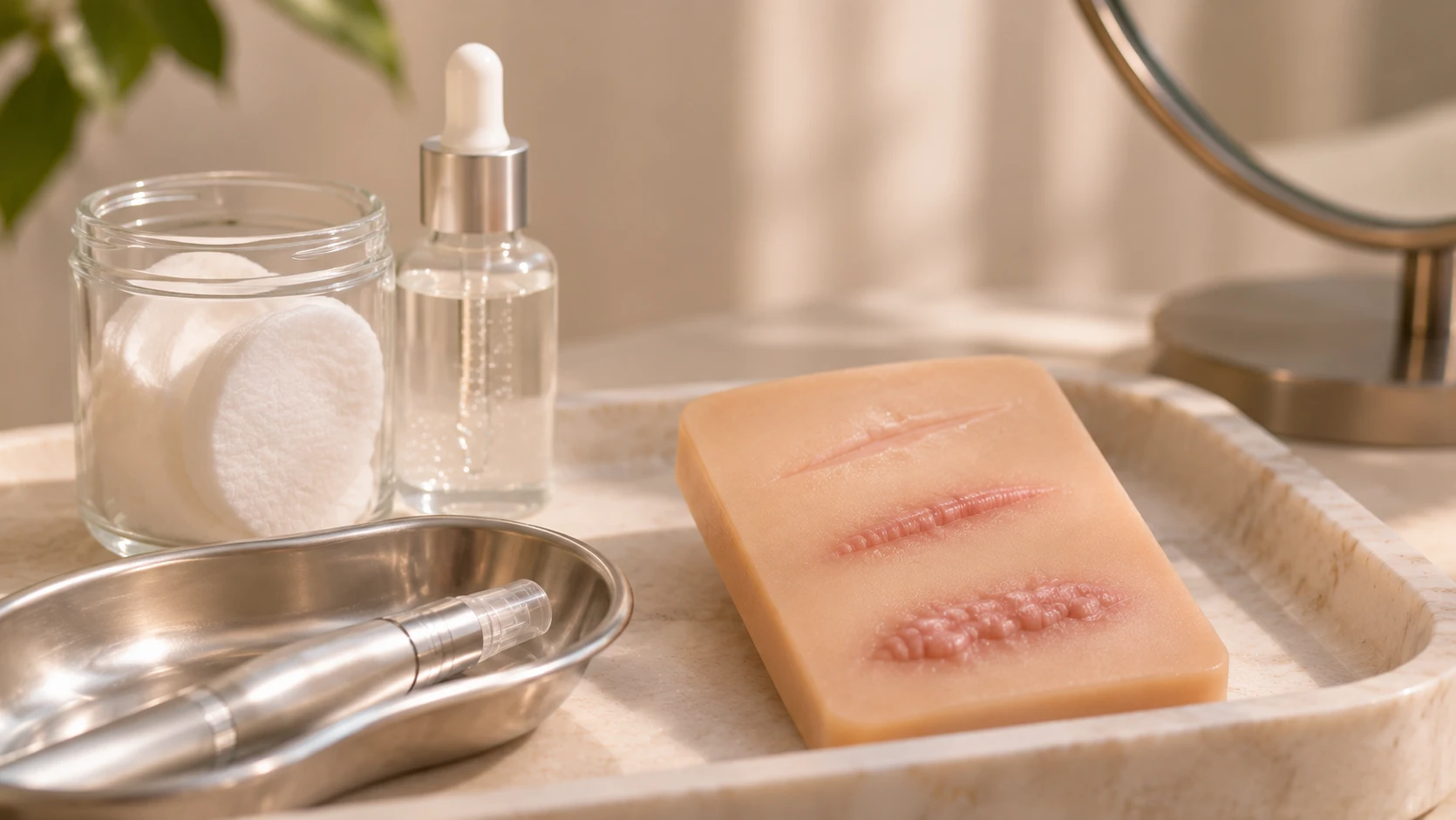
Scars often persist long after a wound has healed, leaving behind a visible reminder that can affect confidence and comfort. While many clinics offer generic "scar removal treatments" in Gurgaon, truly effective Scar Revision and Keloid Treatment in Gurgaon requires a root-cause approach and specialized expertise. At House of Aetheria, our focus is on understanding the scar's underlying biology and tailoring an evidence-based, personalized treatment plan, coordinated by a single medical team, rather than simply applying a one-size-fits-all solution.
Scar revision aims to improve the appearance, texture, and flexibility of scars through surgical or non-surgical methods, while keloid treatment specifically addresses raised, overgrown scars by reducing their size and preventing recurrence. Both require a detailed physical assessment by a specialist to determine the most effective approach, often combining multiple modalities for optimal results.
Key Takeaways
- Scar revision improves scar appearance, while keloid treatment targets and prevents the recurrence of specific overgrown scars.
- Dr. Rahul Jain, a Consultant Plastic & Reconstructive Surgeon at House of Aetheria, leads scar revision and keloid treatments with published expertise in scar modulation.
- Treatment costs for keloids in Gurgaon can range significantly based on size, location, and chosen method, from ₹5,000 for injections to ₹50,000+ for surgical removal.
- Surgical scar revision recovery typically involves 1-2 weeks of downtime, with full results emerging over months.
- Laser treatment for scars is non-invasive and ideal for texture and discoloration, while surgical revision is better for wide, deep, or functionally restrictive scars.
- Keloids have a high recurrence rate, making combination therapies and post-treatment protocols crucial for long-term success.
- Good candidates for scar revision are those with mature scars that cause cosmetic concern, discomfort, or functional impairment.
- Keloids result from an overgrowth of collagen during healing, often influenced by genetic predisposition and skin type.
- Non-surgical scar options include silicone therapy, steroid injections, microneedling, and various laser treatments.
- Results from keloid removal, especially with combination therapy, can be long-lasting, but vigilant aftercare is key to preventing recurrence.
What is the Difference Between Scar Revision and Keloid Treatment?
Scar revision and keloid treatment both address visible skin marks, but they target different types of scars and have distinct objectives. Scar revision is a broader term encompassing various procedures to improve the appearance, texture, and flexibility of any type of scar, making it less noticeable or more functional. Keloid treatment, conversely, focuses specifically on keloids, a particular type of aggressive, raised, and overgrown scar that extends beyond the original wound boundaries.
Scar revision can treat a wide range of scars, including:
- Hypertrophic scars: Raised, red scars that stay within the original wound boundaries.
- Atrophic scars: Depressed scars, like those from acne or chickenpox (see our detailed guide on Acne Scar Types).
- Contracture scars: Scars that restrict movement, often from burns.
- Stretch marks: While technically scars, they require specialized approaches.
Keloid treatment specifically aims to flatten keloids, reduce associated itching or pain, and prevent their return. A keloid differs from a hypertrophic scar because it actively grows beyond the original wound site, often continues to grow over time, and can recur even after removal. Understanding this distinction is crucial for an effective personalized treatment plan.
Best Doctors for Scar Revision and Keloid Treatment in Gurgaon
The best doctors for scar revision and keloid treatment in Gurgaon are those with dual expertise in reconstructive plastic surgery and advanced dermatology, emphasizing a root-cause, evidence-based approach. At House of Aetheria in Sector 65, Dr. Rahul Jain, a Consultant Plastic & Reconstructive Surgeon, leads our surgical scar revision and keloid management. Dr. Jain's background includes an MCh in Plastic Surgery and published, PubMed-indexed research on scar modulation and laser technologies. For non-surgical and laser-based scar treatments, our team of dermatologists, including Dr. Debjani Chakraborty and Dr. Akshay Jain, provides expert care, coordinating closely with Dr. Jain for comprehensive patient management. This integrated approach ensures you receive care from a single medical team that assesses your needs holistically.
How Much Does Keloid Treatment Cost in Gurgaon?
The cost of keloid treatment in Gurgaon varies significantly depending on the keloid's size, location, the chosen treatment modality, and the number of sessions required. Generally, prices can range from a few thousand rupees for initial consultations and steroid injections to upwards of ₹50,000 or more for complex surgical removals combined with post-operative therapies.
Here's a general breakdown of cost factors:
- Steroid Injections (Intralesional Corticosteroids): ₹2,000 to ₹8,000 per session. Multiple sessions are usually needed.
- Laser Treatment: ₹7,000 to ₹30,000 per session, depending on the type of laser (e.g., Pulse Dye Laser, CO2 laser) and the area size. Keloids often require several sessions.
- Surgical Excision: ₹20,000 to ₹70,000+, varying with the size and complexity of the keloid, anesthesia used, and facility fees. Surgery for keloids is almost always followed by adjunctive treatments to prevent recurrence.
- Cryotherapy: ₹3,000 to ₹10,000 per session.
- Radiation Therapy (Post-surgical): This is often recommended for high-risk keloids to prevent recurrence and can add to the overall cost.
During your consultation, our medical team will provide a transparent, personalized treatment plan with a clear cost estimate based on your specific condition and chosen therapies.
Scar Revision Surgery Recovery Time and Aftercare
Recovery from scar revision surgery typically involves an initial downtime of 1-2 weeks, during which you will need to protect the surgical site and follow specific aftercare instructions. However, the full healing process and the final appearance of the revised scar can take several months to a year, or even longer, as the new scar matures.
Recovery Timeline:
- Immediate Post-Op (First Few Days): Swelling, bruising, and mild discomfort are common. Dressings will be applied, and oral pain medication may be prescribed.
- 1-2 Weeks: Stitches or sutures are usually removed. You can often return to light activities, but strenuous exercise and heavy lifting are restricted.
- 1-3 Months: The scar will appear red and slightly raised. During this phase, silicone sheets or gels, massage, and sun protection are critical for optimal healing and to prevent hyperpigmentation.
- 6-12+ Months: The scar gradually flattens, softens, and fades to a lighter color. The final results become apparent as collagen remodels.
Crucial Aftercare Steps:
- Wound Care: Keep the incision clean and dry, as instructed.
- Sun Protection: New scars are highly susceptible to sun damage, which can lead to permanent discoloration (hyperpigmentation). Use high-SPF sunscreen consistently.
- Silicone Therapy: Silicone gels or sheets are evidence-based treatments shown to significantly improve scar appearance by hydrating the scar and reducing collagen overproduction.
- Massage: Gentle massage can help soften the scar tissue once the wound is fully closed.
- Activity Restrictions: Avoid activities that put tension on the healing scar.
Following your surgeon's specific aftercare instructions is paramount for the best possible outcome.
Laser Treatment for Scars vs. Surgical Revision: Which is Better?
Choosing between laser treatment for scars and surgical revision depends entirely on the type, age, depth, and specific characteristics of your scar, as well as your desired outcome. There isn't a universally "better" option; rather, it's about matching the treatment to the individual scar.
| Feature | Laser Treatment for Scars | Surgical Revision |
|---|---|---|
| Best For | Texture irregularities, discoloration, superficial scars, active acne scars, fine lines, improving overall skin quality. | Wide, deep, raised (hypertrophic or keloid), depressed, functionally restrictive, or cosmetically prominent scars. |
| Method | Uses focused light to resurface skin, stimulate collagen, or target pigment/blood vessels. Non-invasive or minimally invasive. | Excises scar tissue, repositions skin, or uses tissue grafts to create a less noticeable scar. Invasive. |
| Recovery | Minimal downtime (redness, swelling) to a few days/weeks depending on laser intensity. | 1-2 weeks initial downtime, longer for full maturation. |
| Cost | Generally lower per session but often requires multiple sessions. | Higher upfront cost, usually a single procedure for excision. |
| Risks | Pigmentation changes, temporary redness, blistering. | Infection, bleeding, numbness, new scar formation (though improved), anesthesia risks. |
When to choose which:
- Laser treatment is often preferred for widespread textural issues, redness, or pigmentation concerns related to scars. For example, fractional lasers can effectively improve the texture of acne scars by stimulating collagen remodeling.
- Surgical revision is necessary for scars that are very wide, deep, restrict movement (contractures), or are actively growing (keloids). It allows for physical removal or re-alignment of scar tissue to create a finer, less conspicuous line.
Often, an integrative approach combining both laser treatments and surgical revision yields the most comprehensive results, addressing both the structural and aesthetic aspects of a scar.
Can Keloids Come Back After Treatment?
Yes, keloids have a significant tendency to recur after treatment, which is a key challenge in their management. The recurrence rate for keloids can be as high as 50-100% if treated with surgery alone, underscoring the importance of combination therapies and meticulous aftercare.
To minimize recurrence, House of Aetheria implements a multi-modal approach:
- Surgical Excision: Careful removal of the keloid.
- Post-Surgical Adjuvant Therapy: This is critical. It often includes:
- Intralesional Steroid Injections: Administered shortly after surgery and in subsequent sessions to suppress inflammation and collagen production.
- Silicone Gel Sheeting/Gels: Applied consistently for months to provide pressure and hydration.
- Compression Therapy: Pressure garments can reduce tension and blood flow to the area, inhibiting keloid growth. (See our guide on Compression Therapy After Surgery.)
- Radiation Therapy: For high-risk or recurrent keloids, a short course of radiation therapy immediately after surgical removal is highly effective in preventing regrowth.
This coordinated, preventive strategy is vital because keloids are fundamentally a disorder of wound healing, and simply removing them without addressing the underlying biological predisposition often leads to their return.
Who is a Good Candidate for Scar Revision Surgery?
A good candidate for scar revision surgery is generally someone with a mature scar (at least 6-12 months old) that causes significant cosmetic concern, physical discomfort, or functional impairment. Ideal candidates should also have realistic expectations about the outcome and be committed to following post-operative care instructions.
You might be a good candidate if:
- Your scar is causing you distress due to its size, shape, color, or texture.
- The scar restricts movement, especially if it's over a joint (a contracture).
- Non-surgical treatments have not yielded satisfactory results.
- You are in good general health, without active skin infections or conditions that impair healing.
- You understand that scar revision aims for improvement, not complete eradication of the scar.
- You do not have a history of developing keloids (unless the treatment specifically targets a keloid).
During your consultation, Dr. Rahul Jain will perform a detailed physical assessment, review your medical history, and discuss your goals to determine if scar revision surgery is the right option for you.
What Causes Keloids and Why Do Some People Get Them?
Keloids are caused by an abnormal healing response where the body produces an excessive amount of collagen after skin injury, leading to a raised, often itchy or painful, scar that grows beyond the original wound boundaries. Why some individuals develop keloids while others do not is largely influenced by genetic predisposition and certain risk factors.
Key Factors Contributing to Keloid Formation:
- Genetics: A strong family history of keloids is the most significant risk factor. If one or both parents have keloids, you are more likely to develop them.
- Skin Type: Individuals with darker skin tones (Fitzpatrick types IV, V, and VI), particularly those of African, Asian, or Hispanic descent, are more prone to keloids.
- Location of Injury: Certain body areas are more susceptible, including the chest (especially the sternum), shoulders, earlobes, and upper back.
- Type of Injury: Keloids can form after any skin trauma, including surgical incisions, acne, burns, piercings, vaccinations, and even minor scratches.
- Age: Keloids most commonly develop between the ages of 10 and 30.
It is important to understand that keloids are not simply "bad scars" but a specific biological response, making their prevention and treatment highly specialized.
Non-Surgical Options for Scar Removal in Gurgaon
Gurgaon offers a range of effective non-surgical options for scar removal that can significantly improve the appearance of various scar types, often without downtime. These treatments are particularly beneficial for superficial scars, pigmentation, and textural irregularities.
Common Non-Surgical Scar Treatments:
- Topical Silicone Therapy: Silicone sheets and gels are widely recommended for new and existing hypertrophic scars and keloids. They hydrate the scar, reduce collagen production, and apply gentle pressure.
- Intralesional Steroid Injections: Corticosteroids injected directly into raised scars (hypertrophic and keloids) help reduce inflammation, flatten the scar, and alleviate itching or pain.
- Microneedling (with or without RF): This procedure creates controlled micro-injuries to stimulate collagen and elastin production, improving scar texture, especially for atrophic scars like those from acne. Our clinic offers microneedling, including RF microneedling, for enhanced results. See our guides to microneedling for acne scars and RF microneedling for acne scars.
- Laser Therapy:
- Fractional Lasers (e.g., CO2, Erbium): Resurface the skin, stimulate collagen remodeling, and improve texture and depth of various scars.
- Pulsed Dye Lasers (PDL): Target redness and flatten raised scars by reducing blood supply.
- Q-Switched Lasers: Effective for hyperpigmented scars and pigmentation treatment.
- Chemical Peels: Can improve superficial scars and skin discoloration by removing outer layers of skin and promoting regeneration.
- Cryotherapy: Freezing the scar tissue with liquid nitrogen can flatten and soften keloids and hypertrophic scars, but requires careful application to avoid skin damage.
The choice of non-surgical treatment depends on a precise physical assessment of your scar by a dermatologist.
How Long Do Results Last After Keloid Removal?
The longevity of results after keloid removal is highly variable and largely dependent on the specific treatment protocol, the patient's individual healing response, and diligent adherence to post-treatment care. With a comprehensive, multi-modal approach combining surgical excision with adjunctive therapies like steroid injections, silicone, and sometimes radiation, results can be long-lasting, significantly reducing the chance of recurrence.
While an individual keloid might be "removed," the underlying predisposition remains. This means new keloids could still form at other injury sites. For the treated area, consistent adherence to the prescribed aftercare, such as wearing silicone sheets or compression, is paramount for maintaining the improved appearance and preventing regrowth for many years. Regular follow-up with your medical team at House of Aetheria allows for early detection and intervention should any signs of recurrence appear.
Common Mistakes People Make Before Scar Revision
Before undergoing scar revision, many people make common mistakes that can hinder treatment success or lead to suboptimal outcomes. Awareness of these can help you prepare properly and achieve the best possible results.
Mistakes to Avoid:
- Seeking Treatment Too Early: Rushing into revision before a scar has fully matured (typically 6-12 months) is a common error. Mature scars respond better to treatment.
- Ignoring Medical History: Failing to disclose a history of keloids, hypertrophic scars, or poor wound healing to your doctor can lead to inappropriate treatment choices and recurrence.
- Having Unrealistic Expectations: Believing a scar can be "erased" completely is a misconception. Scar revision aims to improve appearance, not achieve invisible skin. Our medical team provides honest assessments regarding potential outcomes.
- Not Researching the Specialist: Choosing a provider based solely on price rather than credential and experience is a critical mistake. Ensure your surgeon or dermatologist has specific expertise in scar management.
- Discontinuing Aftercare Prematurely: Post-treatment care, especially for keloids, is as crucial as the procedure itself. Stopping silicone therapy or compression too soon increases recurrence risk.
- Sun Exposure: Exposing the scar to direct sunlight before and after treatment can lead to hyperpigmentation, worsening its appearance.
A thorough consultation and honest communication with your medical team are the best ways to avoid these pitfalls and ensure a successful scar revision journey.
Scar Revision for Old Scars vs. Fresh Scars
The approach to scar revision differs significantly depending on whether the scar is fresh (less than 6-12 months old) or old (mature, typically over a year). Each type requires a distinct strategy to achieve optimal results.
- Fresh Scars:
- Focus: Prevention and early intervention to minimize scar formation.
- Treatments: Primarily non-surgical, including silicone therapy, compression, steroid injections, and early laser treatments to manage redness and inflammation. The goal is to guide the healing process towards a finer, less conspicuous scar.
- Why not surgery? Operating on a fresh, still-active wound can sometimes worsen scarring or trigger aggressive healing responses like keloid formation.
- Old Scars (Mature Scars):
- Focus: Remodeling existing scar tissue and improving its appearance.
- Treatments: Both surgical and non-surgical options are considered. Surgical revision is often suitable for old, well-established scars that are wide, deep, or functionally restrictive. Laser treatments, microneedling, and fillers can also significantly improve the texture, color, and depth of mature scars.
- Why now? Once a scar has matured, its biological activity has settled, making it more predictable to treat and less likely to react excessively to interventions.
At House of Aetheria, we evaluate the scar's age and characteristics during your physical assessment to recommend the most appropriate intervention.
Dermatologist vs. Plastic Surgeon for Keloid Treatment in Gurgaon
For keloid treatment in Gurgaon, both dermatologists and plastic surgeons play crucial roles, often collaborating for the best patient outcomes. The choice largely depends on the keloid's characteristics and the specific treatment required.
- Dermatologist (e.g., Dr. Debjani Chakraborty, Dr. Akshay Jain, Dr. Guneet Bedi):
- Expertise: Specializes in skin conditions and non-surgical treatments.
- Treatments: Primarily handles keloids with steroid injections, cryotherapy, silicone therapy, and various laser treatments. They are also vital for diagnosing skin conditions and managing initial healing.
- When to see them: For smaller keloids, those still in early stages, or for follow-up management after surgical removal to prevent recurrence.
- Plastic Surgeon (e.g., Dr. Rahul Jain):
- Expertise: Specializes in surgical removal, reconstruction, and aesthetic refinement.
- Treatments: Performs surgical excision of larger or stubborn keloids, often followed by intraoperative steroid injections or post-operative radiation. Their skill in meticulous wound closure is critical to minimize recurrence.
- When to see them: For large keloids, those that haven't responded to non-surgical methods, or for keloids causing functional impairment.
At House of Aetheria, our integrative aesthetics model means you benefit from a coordinated approach. Dr. Rahul Jain, our Consultant Plastic & Reconstructive Surgeon, handles surgical aspects, while our expert dermatologists oversee non-surgical interventions and crucial post-operative care. This ensures a comprehensive, evidence-based treatment plan tailored to your specific keloid.
What to Expect During a Scar Revision Consultation
When you book a consultation for scar revision at House of Aetheria, you can expect a thorough, unhurried session focused on understanding your concerns and providing clear, evidence-based recommendations. Our process begins with a detailed review of your medical history and a comprehensive physical assessment.
During your consultation, you can expect:
- Detailed History Taking: We will ask about how your scar formed, its age, previous treatments you've tried, and any associated symptoms like itching or pain.
- Physical Examination: Our specialist will carefully examine your scar, noting its type (e.g., atrophic, hypertrophic, keloid), size, shape, color, texture, location, and how it affects surrounding tissue. We will also assess your skin type and healing characteristics.
- Discussion of Your Goals: We will listen to your concerns and what you hope to achieve, ensuring your expectations are realistic regarding scar improvement.
- Treatment Options Explained: Based on the assessment, you will receive a personalized treatment plan outlining potential surgical and non-surgical options, including their benefits, risks, and expected outcomes.
- Cost and Recovery Timelines: Transparent information on the estimated costs for proposed treatments and realistic recovery timelines will be provided.
- Pre- and Post-Care Instructions: You'll receive initial guidance on how to prepare for treatment and what essential aftercare steps will be needed.
This initial consultation is crucial for establishing a baseline and building a trust-based relationship with your medical team. Please bring any previous medical records or photos of your scar's progression if available.
Frequently Asked Questions
Can scar revision completely remove a scar?
No, scar revision aims to significantly improve a scar's appearance, making it less noticeable or more functional, but it cannot completely erase it. The goal is to achieve the best possible cosmetic outcome.
Is scar revision painful?
Most scar revision procedures are performed under local anesthesia, so you will not feel pain during the treatment. Some discomfort or soreness is common during the recovery period, managed with prescribed pain medication.
How long does it take to see results from scar revision?
Initial improvements may be visible within weeks, but the full results of scar revision can take several months to a year, or even longer, as the scar continues to heal and remodel.
Are scar revision treatments covered by insurance in Gurgaon?
Generally, cosmetic scar revision is not covered by insurance. However, if the scar causes functional impairment (e.g., restricts movement), some portion of the treatment might be covered. It is best to check with your specific insurance provider.
What is the success rate of keloid treatment?
The success rate for keloid treatment, particularly in preventing recurrence, is highest when combining surgical removal with meticulous post-operative adjuvant therapies like steroid injections, silicone, and sometimes radiation. While recurrence remains a risk, comprehensive strategies significantly reduce it.
Can I prevent keloids from forming?
If you are prone to keloids, diligent wound care after any skin injury is crucial. This includes using silicone sheets or gels and applying pressure. Discuss any planned piercings or surgeries with a specialist beforehand.
Is laser treatment safe for all skin types for scars?
Modern laser technologies are generally safe for various skin types, including darker Indian skin tones (Fitzpatrick IV-VI), when performed by experienced dermatologists. Specific lasers are chosen based on your skin type and scar characteristics to minimize risks.
What is the ideal age for scar revision?
Scar revision can be performed at any age once the scar is mature. For children, it's often delayed until they are older and their growth plates have fused, or if the scar causes significant functional issues.
Can diet affect scar healing?
A balanced, nutrient-rich diet supports overall skin health and healing. Ensuring adequate protein, vitamins (especially C and A), and zinc intake can aid the recovery process. Our integrative aesthetics approach considers nutritional factors as part of your overall well-being.
How soon can I apply makeup after scar revision?
You should avoid applying makeup directly over the treated area until the skin has completely healed and your medical team gives approval, usually after stitches are removed and any scabbing has cleared, typically 1-2 weeks.